For centuries, emeralds have captivated humanity with their lush green hues, symbolizing rebirth and eternal spring. Yet behind their mesmerizing beauty lies a complex reality that every collector, jeweler, and enthusiast must confront: the widespread practice of enhancement. The treatment of emeralds with oils and resins—commonly referred to in the trade as "oiling" and "resin filling"—is not merely a technical footnote but a fundamental aspect of the gem's journey from mine to market. Understanding the nuances of these treatments is essential for appreciating both the value and the vulnerabilities of these prized gems.
In the realm of artistic reproduction, few challenges are as technically demanding and aesthetically profound as recreating Vincent van Gogh's The Starry Night within the three-dimensional confines of a crystal block. The swirling, almost turbulent brushstrokes that define the post-impressionist masterpiece present a unique frontier for laser internal engraving technology. This is not merely a question of resolution, but of capturing the very soul of the artist's hand—the pressure, the motion, the emotional intensity frozen in oil paint. The endeavor pushes the very limits of what is physically possible, probing the ultimate boundary between digital precision and analog expression.
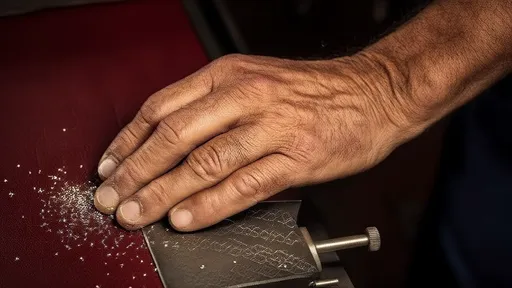
In the hushed glow of the workshop, where the air smells of metal polish and the quiet hum of a motorized tool blends with the focused breathing of its master, there exists a story written not in gemstones or precious metals, but in skin. It is a narrative etched into the very hands of the jeweler, a topography of dedication and precision that reveals itself not to the naked eye, but under the stark, revealing lens of a microscope.
Stepping into the world's most exclusive jewelry salons is akin to entering a parallel universe—one where time slows, opulence is the baseline, and every detail is meticulously curated to cater to the most discerning of clientele. These are not mere stores; they are sanctuaries of artistry, heritage, and unparalleled personal service, designed to offer an experience as exquisite as the jewels they house.
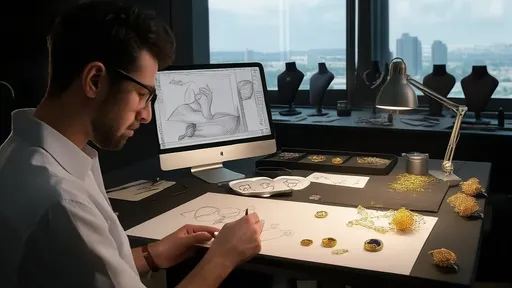
In the hushed ateliers where time seems to stand still, the journey of an extraordinary piece of high jewelry begins not with a sketch, but with a whisper of inspiration. It might be the way light fractures through a droplet of morning dew, the architectural lines of a forgotten monument, or the profound emotion of a personal story shared in confidence by a client. This initial spark, fragile and fleeting, is the sacred origin point from which all else will flow. The creative director and master designer then enter a period of deep immersion, researching, dreaming, and refining this nebulous concept into a tangible vision. It is a process of distillation, transforming the abstract into a narrative that can be told in gemstones and precious metals.
The shimmering allure of mother-of-pearl has captivated humanity for millennia, its iridescent beauty gracing everything from ancient royal adornments to modern luxury accessories. For centuries, this organic gemstone, also known as nacre, could only be harvested from the inner shells of mollusks—a process as slow as it is environmentally taxing. But a quiet revolution is unfolding in materials science laboratories, one that promises to transform pearls and mother-of-pearl from natural wonders into ethically engineered masterpieces. The future of fine jewelry is being written not in oyster beds, but in petri dishes, as scientists learn to cultivate genuine nacre in controlled environments.
In the ever-evolving landscape of wearable technology, a fascinating convergence is taking place at the intersection of high fashion and biometric monitoring. The quest to seamlessly integrate health-tracking capabilities, particularly heart rate monitoring, into pieces of high jewelry is no longer a futuristic concept but a present-day reality. This marriage of form and function represents a significant leap from the clunky, silicone-wristband era of fitness trackers, aiming to provide data without compromising on aesthetics or luxury.
When it comes to micro-set jewelry, a common perception lingers among enthusiasts and collectors: that these exquisite pieces are too delicate for everyday wear, destined to spend their lives tucked away in velvet boxes, brought out only for special occasions. This belief has persisted for years, fueled by the intricate appearance of micro-pave settings and the tiny gemstones that define this technique. But how much of this is based on fact, and how much is simply myth? As someone who has both worn and studied fine jewelry for decades, I’ve found that the reality is far more nuanced—and reassuring—than many assume.
The journey of the travel jewelry box is a fascinating narrative of human ingenuity meeting evolving needs. What began as a simple protective pouch has morphed into a sophisticated piece of functional art, reflecting our changing relationship with adornment, mobility, and security. The evolution is not merely about aesthetics; it is a profound story of innovation driven by the fundamental desires to protect valuable possessions from theft, shield delicate items from damage, and finally, to organize them with intuitive elegance. This transformation mirrors the broader history of travel itself, moving from the precarious journeys of merchants on dusty trade routes to the sleek efficiency of modern globetrotting.
In the bustling landscape of modern parenting, where digital distractions often dominate children's attention, a refreshing trend is emerging that brings families together through rhythm and resonance. Parent-child percussion interaction games are not merely a pastime; they represent a profound shift toward tactile, collaborative play that stimulates both cognitive development and emotional bonding. These activities, which range from simple hand-clapping routines to elaborate drum circles, harness the universal language of rhythm to create shared experiences that resonate deeply within family dynamics.
In the evolving landscape of therapeutic interventions, music communication methods for special children have emerged as a profound and transformative approach. This practice, rooted in both art and science, leverages the universal language of music to bridge gaps where traditional communication may fall short. For children with diverse needs—whether developmental, emotional, or cognitive—music offers a unique pathway to expression, connection, and growth.
In community centers and retirement homes across the country, a quiet revolution is taking place as silver-haired learners gather around tablets and digital keyboards. The emergence of digital musical instrument education for seniors represents more than just technological adoption—it signifies a profound shift in how we perceive aging, cognitive health, and creative expression in later life.
In the high-stakes world of corporate leadership, where decisions carry multimillion-dollar implications and the weight of entire organizations rests on their shoulders, executives are increasingly turning to an unexpected source of relief: music. Across boardrooms from Silicon Valley to Wall Street, a new trend is emerging as top-tier companies invest in specialized music stress reduction class for their C-suite personnel, recognizing that the well-being of their leaders directly impacts organizational performance and innovation.
In the evolving landscape of therapeutic and educational interventions, the integration of music with sensory integration has emerged as a profoundly effective methodology. Music-based sensory integration training, often referred to as Musical Sensory Integration (MSI), represents a dynamic fusion where the structured elements of sound, rhythm, and melody are harnessed to engage and regulate the sensory systems. This approach moves beyond traditional auditory training, positioning music not as a mere backdrop but as an active, organizing force for neural processing. The core premise rests on music's innate ability to capture attention, modulate arousal levels, and provide a predictable yet flexible framework for sensory exploration and motor response.
In the realm of outdoor audio systems, the challenge of protecting equipment from environmental elements remains a critical concern for engineers and event organizers alike. Water, in particular, poses a significant threat to the integrity and performance of amplification devices, speakers, and associated electronics. As such, developing robust waterproofing strategies is not merely an option but a necessity for ensuring reliability and longevity in varied climatic conditions.
In the intricate ecosystem of computer audio, the role of sound card drivers often remains underappreciated until something goes awry. These software components serve as the critical bridge between your operating system and the hardware responsible for producing and capturing sound. While most users settle for the default driver configurations provided by manufacturers, a deeper understanding of driver optimization can unlock significantly enhanced audio performance, reduced latency, and improved stability across various applications.
In the ever-evolving landscape of electronic keyboards, the quality and versatility of auto-accompaniment styles have become a defining feature for musicians of all levels. From hobbyists to professional performers, these built-in rhythm and harmony patterns serve as both a creative springboard and a technical benchmark. The evolution of these styles reflects not just technological advancement but also shifting musical tastes and global influences.
In the ever-expanding universe of content creation, the microphone stands as one of the most critical tools for anyone serious about audio quality. Whether you're a budding podcaster, a YouTuber, a streamer, or a musician recording demos, the quest for pristine sound without obliterating your budget is a common challenge. The sub-$50 and sub-$100 microphone market has exploded in recent years, offering a dizzying array of options that promise professional-grade performance. But how do they truly stack up against each other? This deep dive aims to cut through the marketing noise and provide a clear, practical evaluation of the best microphones you can get for under five hundred dollars, a price point that has become a sweet spot for high-quality, accessible audio gear.
In the rapidly evolving landscape of wireless communication, the resilience of monitoring systems against interference has emerged as a critical focal point for both developers and end-users. Recent advancements in testing methodologies have shed new light on the capabilities and limitations of modern wireless listening devices operating in increasingly congested electromagnetic environments. Field tests conducted across urban and remote settings reveal a complex interplay between signal integrity, bandwidth efficiency, and adaptive countermeasures that define the next generation of surveillance technology.
Every recording begins with a single sound, and capturing that sound accurately starts with the right microphone and, just as importantly, the right testing process. A microphone test is not merely a technical formality; it is the first and most crucial conversation between the artist and the technology. It is the moment you learn the instrument's true voice, its nuances, its strengths, and its potential pitfalls before a single note of the final performance is committed to tape. The approach to this ritual, however, is not universal. A one-size-fits-all method is a surefire path to mediocre results. The methodology must be as specialized as the microphones themselves, adapting to the distinct personalities of dynamic, condenser, and ribbon designs.
In the world of music education, few things are as enchanting yet challenging as training young voices to sing in perfect harmony. The delicate nature of children's vocal development requires innovative approaches that maintain engagement while building fundamental skills. Traditional methods of drilling scales and intervals often fall short with younger students, whose attention spans and physical capabilities differ significantly from adult learners. This has led to a fascinating evolution in pedagogical approaches, particularly through the integration of game-based learning techniques specifically designed for children's choirs.
In the intricate world of a cappella music, the art of vocal percussion stands as a testament to human creativity and the boundless potential of the human voice. Often referred to as "beatboxing" in contemporary contexts, this technique involves using one's mouth, lips, tongue, and voice to emulate drum machines, turntables, and other percussive instruments. It is the rhythmic backbone of many a cappella groups, providing the essential groove and pulse that transforms harmonious vocals into a full-bodied musical experience. The history of vocal percussion is as rich as it is diverse, with roots stretching back centuries across various cultures, yet it has found a particularly vibrant home in modern a cappella ensembles.
In the intricate world of Chinese opera, few elements are as visually mesmerizing and technically demanding as the art of water sleeve manipulation, known as shuixiu. This ancient performance technique, where actors wield elongated silk sleeves with breathtaking precision, represents far more than mere aesthetic embellishment. It is a profound non-verbal language, a dance of emotions conveyed through fabric and movement. Yet, to view the water sleeves in isolation would be to miss half the story. Their true power and narrative depth are unlocked only when harmoniously synchronized with another cornerstone of operatic artistry: vocal expression. The marriage of these two disciplines—the visual poetry of the sleeves and the auditory force of the voice—creates a holistic and utterly captivating theatrical experience.
The landscape of audio technology has been fundamentally reshaped by the emergence of magnetic bass systems, offering unparalleled depth and resonance in sound reproduction. As these systems become increasingly integrated into consumer electronics, professional audio setups, and automotive sound environments, a critical conversation has emerged—one that moves beyond pure acoustic performance to address the paramount importance of safety. The development and deployment of these powerful transducers are not merely an engineering challenge but a responsibility, necessitating a comprehensive framework to ensure they enhance our auditory experience without introducing hidden risks.
The fashion industry has long been at the forefront of innovation, blending creativity with technology to redefine consumer experiences. In a groundbreaking move, the concept of the metaverse has collided with physical retail in what is being hailed as the first case of digital asset materialization—specifically, through the lens of loafers. This isn’t just about virtual sneakers or pixelated handbags; it’s a full-scale integration of blockchain-based ownership and tangible craftsmanship. The "Loafverse" initiative, as it’s been dubbed, is rewriting the rules of how we perceive value, authenticity, and utility in fashion.
The intersection of traditional Islamic art and contemporary fashion has birthed one of the most visually striking sartorial movements in recent memory - the Persian calligraphy suit. What began as niche experimentation by avant-garde Middle Eastern designers has blossomed into a global phenomenon, with luxury houses from Milan to Dubai incorporating Arabic script deconstructions into their collections. This isn't mere cultural appropriation, but rather a profound dialogue between heritage and modernity.
In the heart of ancient Mesoamerica, the Maya civilization crafted a sophisticated calendar system that not only measured time but also encoded their cosmic worldview. Today, this intricate knowledge has found a surprising new form—wearable art. Designers and artisans are transforming the sacred symbols of the Mayan calendar into stunning pieces of jewelry and accessories, merging ancient wisdom with contemporary fashion. These creations, often referred to as "Mayan Calendar Belts," are more than just decorative items; they serve as tangible connections to a lost civilization, inviting wearers to carry a fragment of history with them.
The intricate artistry of Miao silverwork, a centuries-old intangible cultural heritage of China’s Miao ethnic group, is undergoing a quiet revolution. As modern technology intersects with traditional craftsmanship, parametric design has emerged as a powerful tool to preserve, analyze, and innovate upon these delicate metalworking techniques. This fusion of ancient wisdom and computational methods is creating new possibilities for cultural preservation while respecting the essence of the craft.
The neon-lit streets of Lagos pulse with a rhythm that defies categorization – a fusion of ancient drumbeats and digital glitches that echoes through the towering megastructures of a reimagined Africa. This is the visual language of Afrofuturist cyber-tribalism, where ancestral wisdom interfaces with quantum computing, and biomechanical deities wear the masks of forgotten gods. Across the continent's creative vanguard, artists are forging a new aesthetic paradigm that dissolves the false dichotomy between tradition and innovation.
In the quiet corners of Fukushima Prefecture, where cherry blossoms still bloom with fragile resilience, a centuries-old tradition is undergoing a remarkable metamorphosis. The art of kimono-making, once threatened by the triple disaster of earthquake, tsunami, and nuclear crisis in 2011, has emerged as an unexpected symbol of cultural rebirth. Local artisans, many of whom lost everything in the catastrophe, are now collaborating with contemporary designers to transform this emblem of Japanese heritage into wearable art for the global fashion stage.
In the bustling fashion scene of China, where tradition meets modernity, the Chengdu Fashion Week has emerged as a groundbreaking platform for independent designers to showcase their creativity. This year, the event took an unexpected turn as local dialect elements became a defining feature, breaking through cultural and linguistic barriers to captivate a global audience. The fusion of Sichuan’s rich linguistic heritage with contemporary design has not only redefined regional aesthetics but also sparked conversations about identity and authenticity in fashion.
In the realm of fashion, few names evoke as much reverence and intrigue as Saint Laurent. The house’s latest offering, Desert Book, is a testament to the enduring allure of minimalism, reimagined through a lens of poetic subtlety. This collection is not merely a series of garments; it is a narrative woven from the arid landscapes of the desert, where silence speaks louder than words and simplicity becomes a form of profound expression.
In an era dominated by polished influencer marketing and celebrity endorsements, Uniqlo's "regular people" fashion shows stand out as a deliberate departure from industry norms. The Japanese apparel giant has built a global empire by celebrating the mundane, transforming everyday wear into a cultural phenomenon. Their recent "Uniqlo U" showcase in Tokyo featured not professional models but office workers, students, and retirees - a strategic move that reveals deeper currents in contemporary retail psychology.
The labyrinthine gardens of Château de la Colle Noire have long served as more than just an ornamental backdrop for Christian Dior's creative sanctuary. These meticulously curated pathways, with their towering hedges and sudden dead-ends, function as a spatial metaphor for the complex power dynamics inherent in both fashion empires and aristocratic history. Visitors who lose themselves in these verdant corridors often report experiencing a peculiar sensation - as if the very foliage whispers secrets about the unspoken hierarchies governing taste, privilege, and creative authority.
In December 2022, Balenciaga’s pre-fall 2023 collection presentation sparked a firestorm of controversy when the luxury fashion house transformed its Paris showroom into a dystopian landscape of scattered trash, crumpled paper, and debris. What was intended as a bold artistic statement on consumerism and environmental waste quickly became a lightning rod for criticism, with many accusing the brand of hypocrisy and performative activism. The spectacle, dubbed "Balenciaga’s trash mountain," blurred the lines between high fashion and social commentary, leaving audiences divided over whether it was a powerful critique or a tone-deaf stunt.
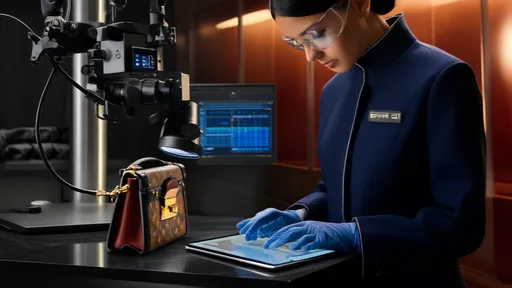
The luxury resale market has long been a battlefield where authenticity means everything. For decades, human experts with trained eyes and encyclopedic knowledge determined whether a Chanel flap bag or Rolex Daytona was genuine or counterfeit. Now, artificial intelligence is storming this exclusive domain, threatening to replace the guild of seasoned authenticators who once held unquestioned authority.
The wedding industry has long thrived on the promise of eternal love, but a new niche market is emerging from the ashes of broken vows: divorce box economics. Among the most poignant services gaining traction is wedding dress transformation—a process that allows heartbroken individuals to repurpose their once-cherished gowns into something meaningful beyond the altar. This isn’t just about recycling fabric; it’s about alchemizing grief into renewal.
The fashion industry is witnessing a seismic shift as Generation Alpha – children born between 2010 and 2024 – emerges as unexpected power players in household purchasing decisions. These digital natives, raised with tablets in their hands and influencer culture in their bloodstream, are rewriting the rules of family consumption patterns with particular dominance in apparel choices.
The luxury fashion landscape has always been a carefully curated ecosystem where price tags serve as invisible barriers between social strata. When Coach, the American leather goods brand synonymous with affordable luxury, began slashing prices across its collections, the move sent shockwaves through the industry and triggered an unexpected wave of class anxiety among its customer base.