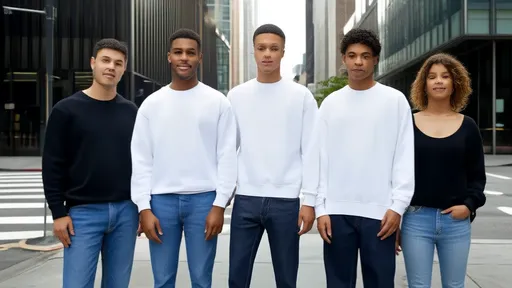
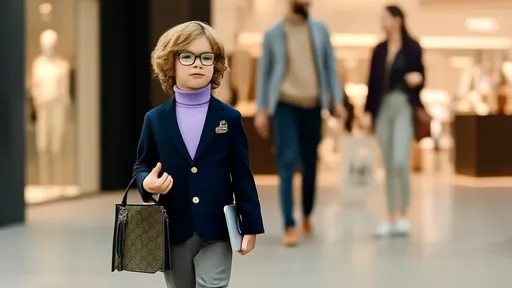
The fashion industry is witnessing a seismic shift as Generation Alpha – children born between 2010 and 2024 – emerges as unexpected power players in household purchasing decisions. These digital natives, raised with tablets in their hands and influencer culture in their bloodstream, are rewriting the rules of family consumption patterns with particular dominance in apparel choices.
The Alpha Influence Phenomenon
Walk through any shopping mall and you'll see the evidence everywhere – parents debating color choices with opinionated five-year-olds, tweens directing their mothers toward specific brands, families coordinating outfits based on a child's preferences. This isn't accidental behavior but rather the manifestation of what sociologists call "reverse socialization," where traditional top-down parenting models collide with bottom-up cultural influence.
Unlike previous generations where children passively accepted hand-me-downs or parental selections, Alphas have developed what market researchers term "persuasion capital." Their constant exposure to digital content through YouTube Kids, TikTok, and gaming platforms has created sophisticated mini-consumers who can articulate specific brand desires with startling precision. Fashion houses now recognize that convincing the child often means securing the family's business.
Digital Natives With Purchasing Power
The average Alpha child begins influencing purchases as early as age three, with fashion decisions ranking among their primary spheres of control. Several factors converge to create this phenomenon: unprecedented access to information through child-friendly devices, the rise of "unboxing" culture that transforms products into entertainment, and parents' increasing willingness to consider children's preferences as valid consumer input.
Brands like Gucci and Balmain have taken notice, launching elaborate children's lines that mirror adult collections. "We're not just selling to parents anymore," explains Marco Bizzari, CEO of a major luxury brand's children's division. "The Alpha child comes to our stores with clear expectations about fabrics, silhouettes, even sustainability practices. They've done their research through digital channels before ever touching a garment."
This shift has forced retailers to redesign physical spaces with child-friendly fitting rooms, interactive displays that appeal to shorter attention spans, and sales associates trained in negotiating with both parents and their opinionated offspring simultaneously.
The Psychology Behind Parental Compliance
Modern parenting philosophies emphasizing child agency combine with practical realities to create perfect conditions for Alpha influence. Dual-income households with limited family time often prioritize harmonious shopping experiences over parental authority battles. The psychological concept of "compensatory consumption" also plays a role – parents who feel guilty about work commitments frequently yield to children's fashion requests as emotional reparation.
Dr. Evelyn Carter, child psychologist and author of The Persuasive Child, observes: "Today's parents view clothing choices as relatively low-stakes decisions compared to screen time or nutrition. Allowing a child to select their own outfits – or influence family purchases – provides measurable boosts to their self-esteem and decision-making confidence. Parents recognize this developmental benefit, even if it means living with some questionable color combinations."
Social media has amplified this dynamic, transforming children's fashion choices into public performance. Instagram-savvy parents recognize that well-dressed children attract engagement, creating subtle pressure to accommodate trend-forward selections. The phenomenon has birthed an entire subcategory of "kidfluencers" whose outfits generate thousands of likes and direct imitation.
Economic Impact and Market Adaptation
The financial implications are staggering. Children's apparel represents the fastest-growing segment in fashion, projected to reach $300 billion globally by 2027. Traditional marketing funnels have inverted – where brands once targeted parents with practical messaging about durability and value, they now create aspirational content aimed directly at children, knowing parental purchases will follow.
Retail analytics reveal that families where children participate in clothing selection spend 23% more per transaction and visit stores 40% more frequently than traditional households. "The Alpha child doesn't just want one outfit – they want a wardrobe ecosystem," notes retail strategist Damian Wu. "They'll request specific shoes to match a dress, accessories to complete a look, even coordinate siblings' outfits. This creates exponential sales opportunities."
Smart brands have adapted by developing hybrid shopping experiences. Augmented reality apps allow children to "try on" clothes using smartphone cameras before requesting parental purchases. Subscription services deliver curated outfits based on a child's favorite colors and characters, with easy parental approval mechanisms. Even high-end department stores now host "family styling sessions" where associates cater to both generations simultaneously.
Cultural Shifts in Family Dynamics
Beyond economics, the Alpha generation's fashion influence signals deeper societal changes. The erosion of rigid parent-child hierarchies, the democratization of taste-making through social platforms, and the growing recognition of children as individuals with distinct preferences all converge in the clothing aisle.
This generational shift carries implications for sustainability as well. Alpha children raised on eco-conscious messaging frequently reject fast fashion in favor of brands with clear environmental policies, forcing parents to reconsider their own purchasing habits. "My seven-year-old won't let me buy anything unless she checks the materials first," laughs one mother shopping in London. "She's more consistent about recycling fabrics than I ever was at her age."
As Generation Alpha continues to mature, their early dominance in family fashion decisions suggests they'll wield unprecedented consumer power throughout their lives. Retailers preparing for this future aren't just adjusting product lines – they're reimagining fundamental assumptions about who holds influence in the modern household. The children may not be paying the bills, but increasingly, they're calling the shots.
The fashion industry's next decade will be shaped not by top-down trends from Paris runways, but by bottom-up demands from playgrounds and iPad screens. For better or worse, the Alpha generation has claimed their seat at the retail table – and they're just getting started.
The fashion industry has long been at the forefront of innovation, blending creativity with technology to redefine consumer experiences. In a groundbreaking move, the concept of the metaverse has collided with physical retail in what is being hailed as the first case of digital asset materialization—specifically, through the lens of loafers. This isn’t just about virtual sneakers or pixelated handbags; it’s a full-scale integration of blockchain-based ownership and tangible craftsmanship. The "Loafverse" initiative, as it’s been dubbed, is rewriting the rules of how we perceive value, authenticity, and utility in fashion.
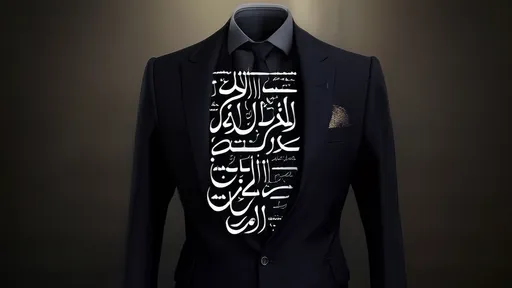
The intersection of traditional Islamic art and contemporary fashion has birthed one of the most visually striking sartorial movements in recent memory - the Persian calligraphy suit. What began as niche experimentation by avant-garde Middle Eastern designers has blossomed into a global phenomenon, with luxury houses from Milan to Dubai incorporating Arabic script deconstructions into their collections. This isn't mere cultural appropriation, but rather a profound dialogue between heritage and modernity.
In the heart of ancient Mesoamerica, the Maya civilization crafted a sophisticated calendar system that not only measured time but also encoded their cosmic worldview. Today, this intricate knowledge has found a surprising new form—wearable art. Designers and artisans are transforming the sacred symbols of the Mayan calendar into stunning pieces of jewelry and accessories, merging ancient wisdom with contemporary fashion. These creations, often referred to as "Mayan Calendar Belts," are more than just decorative items; they serve as tangible connections to a lost civilization, inviting wearers to carry a fragment of history with them.
The intricate artistry of Miao silverwork, a centuries-old intangible cultural heritage of China’s Miao ethnic group, is undergoing a quiet revolution. As modern technology intersects with traditional craftsmanship, parametric design has emerged as a powerful tool to preserve, analyze, and innovate upon these delicate metalworking techniques. This fusion of ancient wisdom and computational methods is creating new possibilities for cultural preservation while respecting the essence of the craft.
The neon-lit streets of Lagos pulse with a rhythm that defies categorization – a fusion of ancient drumbeats and digital glitches that echoes through the towering megastructures of a reimagined Africa. This is the visual language of Afrofuturist cyber-tribalism, where ancestral wisdom interfaces with quantum computing, and biomechanical deities wear the masks of forgotten gods. Across the continent's creative vanguard, artists are forging a new aesthetic paradigm that dissolves the false dichotomy between tradition and innovation.
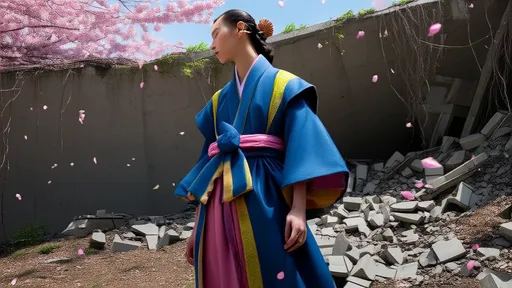
In the quiet corners of Fukushima Prefecture, where cherry blossoms still bloom with fragile resilience, a centuries-old tradition is undergoing a remarkable metamorphosis. The art of kimono-making, once threatened by the triple disaster of earthquake, tsunami, and nuclear crisis in 2011, has emerged as an unexpected symbol of cultural rebirth. Local artisans, many of whom lost everything in the catastrophe, are now collaborating with contemporary designers to transform this emblem of Japanese heritage into wearable art for the global fashion stage.
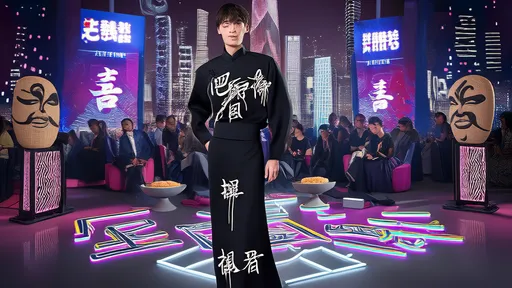
In the bustling fashion scene of China, where tradition meets modernity, the Chengdu Fashion Week has emerged as a groundbreaking platform for independent designers to showcase their creativity. This year, the event took an unexpected turn as local dialect elements became a defining feature, breaking through cultural and linguistic barriers to captivate a global audience. The fusion of Sichuan’s rich linguistic heritage with contemporary design has not only redefined regional aesthetics but also sparked conversations about identity and authenticity in fashion.
In the realm of fashion, few names evoke as much reverence and intrigue as Saint Laurent. The house’s latest offering, Desert Book, is a testament to the enduring allure of minimalism, reimagined through a lens of poetic subtlety. This collection is not merely a series of garments; it is a narrative woven from the arid landscapes of the desert, where silence speaks louder than words and simplicity becomes a form of profound expression.
In an era dominated by polished influencer marketing and celebrity endorsements, Uniqlo's "regular people" fashion shows stand out as a deliberate departure from industry norms. The Japanese apparel giant has built a global empire by celebrating the mundane, transforming everyday wear into a cultural phenomenon. Their recent "Uniqlo U" showcase in Tokyo featured not professional models but office workers, students, and retirees - a strategic move that reveals deeper currents in contemporary retail psychology.
The labyrinthine gardens of Château de la Colle Noire have long served as more than just an ornamental backdrop for Christian Dior's creative sanctuary. These meticulously curated pathways, with their towering hedges and sudden dead-ends, function as a spatial metaphor for the complex power dynamics inherent in both fashion empires and aristocratic history. Visitors who lose themselves in these verdant corridors often report experiencing a peculiar sensation - as if the very foliage whispers secrets about the unspoken hierarchies governing taste, privilege, and creative authority.
In December 2022, Balenciaga’s pre-fall 2023 collection presentation sparked a firestorm of controversy when the luxury fashion house transformed its Paris showroom into a dystopian landscape of scattered trash, crumpled paper, and debris. What was intended as a bold artistic statement on consumerism and environmental waste quickly became a lightning rod for criticism, with many accusing the brand of hypocrisy and performative activism. The spectacle, dubbed "Balenciaga’s trash mountain," blurred the lines between high fashion and social commentary, leaving audiences divided over whether it was a powerful critique or a tone-deaf stunt.
The luxury resale market has long been a battlefield where authenticity means everything. For decades, human experts with trained eyes and encyclopedic knowledge determined whether a Chanel flap bag or Rolex Daytona was genuine or counterfeit. Now, artificial intelligence is storming this exclusive domain, threatening to replace the guild of seasoned authenticators who once held unquestioned authority.
The wedding industry has long thrived on the promise of eternal love, but a new niche market is emerging from the ashes of broken vows: divorce box economics. Among the most poignant services gaining traction is wedding dress transformation—a process that allows heartbroken individuals to repurpose their once-cherished gowns into something meaningful beyond the altar. This isn’t just about recycling fabric; it’s about alchemizing grief into renewal.
The fashion industry is witnessing a seismic shift as Generation Alpha – children born between 2010 and 2024 – emerges as unexpected power players in household purchasing decisions. These digital natives, raised with tablets in their hands and influencer culture in their bloodstream, are rewriting the rules of family consumption patterns with particular dominance in apparel choices.
The luxury fashion landscape has always been a carefully curated ecosystem where price tags serve as invisible barriers between social strata. When Coach, the American leather goods brand synonymous with affordable luxury, began slashing prices across its collections, the move sent shockwaves through the industry and triggered an unexpected wave of class anxiety among its customer base.