The luxury resale market has long been a battlefield where authenticity means everything. For decades, human experts with trained eyes and encyclopedic knowledge determined whether a Chanel flap bag or Rolex Daytona was genuine or counterfeit. Now, artificial intelligence is storming this exclusive domain, threatening to replace the guild of seasoned authenticators who once held unquestioned authority.
In Tokyo's upscale Ginza district, where vintage Hermès scarves change hands for thousands, a quiet revolution is underway. Authentication startup Entrupy has installed its microscopic imaging devices in several high-end consignment stores. Their AI system claims 99.1% accuracy in identifying fake leather goods - a statistic that makes veteran authenticators bristle. "No machine can understand the soul of craftsmanship," argues Keiko Takahashi, who's authenticated luxury handbags for 27 years. Yet retailers report fewer returns and disputes since implementing the technology.
The stakes couldn't be higher. The global secondhand luxury market is projected to reach $77 billion by 2025 according to Bain & Company, with counterfeits draining an estimated $4.5 billion annually from legitimate businesses. Traditional authentication methods - examining stitching patterns, smelling leather, studying hardware engravings under magnification - require years of apprenticeship. AI promises to democratize this secret knowledge through machine learning algorithms trained on millions of product images.
Luxury platforms are betting big on this transition. The RealReal, which went public in 2019, processes over 5,000 items daily through its authentication centers. Their human experts still handle final approvals, but AI now performs initial screenings that flag 30% of submissions for immediate rejection. "The volume would be impossible without AI augmentation," admits Chief Authenticator Graham Wetzbarger. Similarly, Vestiaire Collective's "Certification" service combines AI scanning with human verification, reducing processing time from 72 hours to just 24.
Not everyone welcomes this disruption. In Paris's legendary Marché aux Puces flea market, third-generation authenticator Claude Fournier scoffs at the idea of machines replacing his expertise. "A 1950s Louis Vuitton trunk has variations no database would recognize," he insists, running fingers over worn brass corners. Indeed, early AI systems struggled with vintage items and limited-edition pieces where production quirks defy standardized patterns. But the technology is learning fast - newer models incorporate 3D imaging and material spectroscopy to analyze items at molecular levels.
The human cost of this shift is becoming apparent. Japan's Komehyo, a 70-year-old secondhand jewelry chain, reduced its authentication staff by 40% after implementing AI systems. "It's not that we fired people," explains HR director Mari Suzuki carefully. "We simply stopped replacing retirees." Similar stories echo across the industry, from Milan to New York. While companies emphasize AI as a tool rather than replacement, the writing appears on the wall for many traditional roles.
Legal frameworks scramble to keep pace with the technology. The European Union's proposed AI Act would classify authentication systems as "high-risk," requiring rigorous testing and documentation. Meanwhile, U.S. courts increasingly admit AI-generated authenticity certificates as evidence in counterfeit cases - a controversial development that worries defense attorneys. "These systems are black boxes," argues intellectual property lawyer David Feldman. "How do you cross-examine an algorithm?"
Consumer attitudes remain divided. While younger shoppers overwhelmingly trust technology over human judgment (78% according to a 2023 Statista survey), older luxury clients still demand personal assurance. "I want to look someone in the eye when they tell me my Birkin is real," declares socialite Patricia van der Woodsen during a Madison Avenue shopping spree. This generational divide explains why hybrid models - combining AI efficiency with human oversight - currently dominate the market.
The technological arms race continues unabated. Startups like Luxurify now deploy blockchain-powered authentication combining AI imaging with immutable digital twins. LVMH's AURA platform tracks products throughout their lifecycle, creating unforgeable histories. Even traditional auction houses are adapting - Christie's recently partnered with AI firm Art Recognition to vet watches and jewelry. As algorithms grow more sophisticated, they're expanding beyond physical goods to authenticate digital luxury items and NFTs, further blurring lines between human and machine expertise.
Perhaps the most profound impact lies in market democratization. AI authentication enables smaller resellers and individual consignors to compete with established players by offering credible verification at fractional costs. Social commerce platforms like Instagram and WeChat now integrate these tools directly into their marketplaces. "It's disrupting the gatekeeper model," observes Harvard Business School professor Elaine Wong. "The mystique of the all-knowing authenticator is giving way to transparent, accessible technology."
Yet for all its promise, AI still faces limitations in capturing the intangible qualities that define true luxury. The faint creak of aged leather, the way light dances across a perfectly cut diamond, the subtle imperfections that testify to handcrafted excellence - these remain the province of human senses and judgment. The future likely holds not replacement, but redefinition, as AI handles volume while human experts focus on borderline cases and exceptional pieces. In the high-stakes world of luxury authentication, the winning formula may be neither man nor machine alone, but their uneasy yet increasingly necessary alliance.
The fashion industry has long been at the forefront of innovation, blending creativity with technology to redefine consumer experiences. In a groundbreaking move, the concept of the metaverse has collided with physical retail in what is being hailed as the first case of digital asset materialization—specifically, through the lens of loafers. This isn’t just about virtual sneakers or pixelated handbags; it’s a full-scale integration of blockchain-based ownership and tangible craftsmanship. The "Loafverse" initiative, as it’s been dubbed, is rewriting the rules of how we perceive value, authenticity, and utility in fashion.
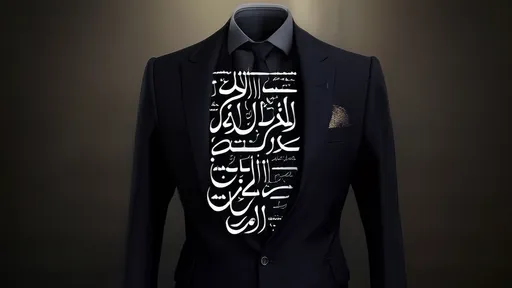
The intersection of traditional Islamic art and contemporary fashion has birthed one of the most visually striking sartorial movements in recent memory - the Persian calligraphy suit. What began as niche experimentation by avant-garde Middle Eastern designers has blossomed into a global phenomenon, with luxury houses from Milan to Dubai incorporating Arabic script deconstructions into their collections. This isn't mere cultural appropriation, but rather a profound dialogue between heritage and modernity.
In the heart of ancient Mesoamerica, the Maya civilization crafted a sophisticated calendar system that not only measured time but also encoded their cosmic worldview. Today, this intricate knowledge has found a surprising new form—wearable art. Designers and artisans are transforming the sacred symbols of the Mayan calendar into stunning pieces of jewelry and accessories, merging ancient wisdom with contemporary fashion. These creations, often referred to as "Mayan Calendar Belts," are more than just decorative items; they serve as tangible connections to a lost civilization, inviting wearers to carry a fragment of history with them.
The intricate artistry of Miao silverwork, a centuries-old intangible cultural heritage of China’s Miao ethnic group, is undergoing a quiet revolution. As modern technology intersects with traditional craftsmanship, parametric design has emerged as a powerful tool to preserve, analyze, and innovate upon these delicate metalworking techniques. This fusion of ancient wisdom and computational methods is creating new possibilities for cultural preservation while respecting the essence of the craft.
The neon-lit streets of Lagos pulse with a rhythm that defies categorization – a fusion of ancient drumbeats and digital glitches that echoes through the towering megastructures of a reimagined Africa. This is the visual language of Afrofuturist cyber-tribalism, where ancestral wisdom interfaces with quantum computing, and biomechanical deities wear the masks of forgotten gods. Across the continent's creative vanguard, artists are forging a new aesthetic paradigm that dissolves the false dichotomy between tradition and innovation.
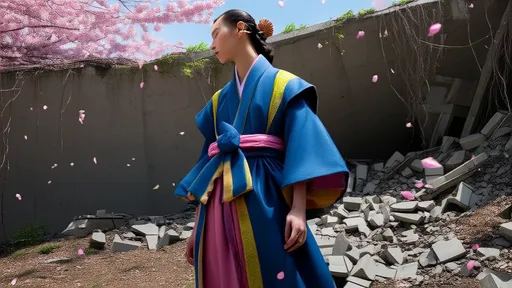
In the quiet corners of Fukushima Prefecture, where cherry blossoms still bloom with fragile resilience, a centuries-old tradition is undergoing a remarkable metamorphosis. The art of kimono-making, once threatened by the triple disaster of earthquake, tsunami, and nuclear crisis in 2011, has emerged as an unexpected symbol of cultural rebirth. Local artisans, many of whom lost everything in the catastrophe, are now collaborating with contemporary designers to transform this emblem of Japanese heritage into wearable art for the global fashion stage.
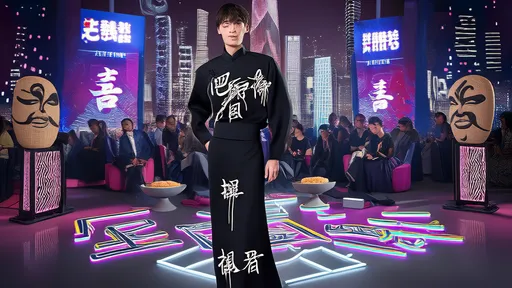
In the bustling fashion scene of China, where tradition meets modernity, the Chengdu Fashion Week has emerged as a groundbreaking platform for independent designers to showcase their creativity. This year, the event took an unexpected turn as local dialect elements became a defining feature, breaking through cultural and linguistic barriers to captivate a global audience. The fusion of Sichuan’s rich linguistic heritage with contemporary design has not only redefined regional aesthetics but also sparked conversations about identity and authenticity in fashion.
In the realm of fashion, few names evoke as much reverence and intrigue as Saint Laurent. The house’s latest offering, Desert Book, is a testament to the enduring allure of minimalism, reimagined through a lens of poetic subtlety. This collection is not merely a series of garments; it is a narrative woven from the arid landscapes of the desert, where silence speaks louder than words and simplicity becomes a form of profound expression.
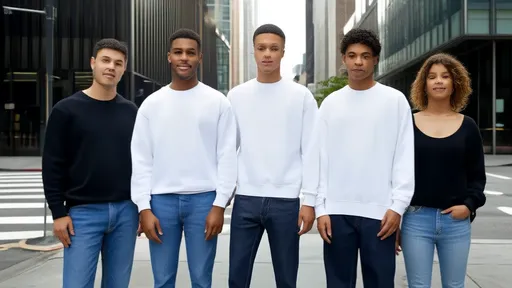
In an era dominated by polished influencer marketing and celebrity endorsements, Uniqlo's "regular people" fashion shows stand out as a deliberate departure from industry norms. The Japanese apparel giant has built a global empire by celebrating the mundane, transforming everyday wear into a cultural phenomenon. Their recent "Uniqlo U" showcase in Tokyo featured not professional models but office workers, students, and retirees - a strategic move that reveals deeper currents in contemporary retail psychology.
The labyrinthine gardens of Château de la Colle Noire have long served as more than just an ornamental backdrop for Christian Dior's creative sanctuary. These meticulously curated pathways, with their towering hedges and sudden dead-ends, function as a spatial metaphor for the complex power dynamics inherent in both fashion empires and aristocratic history. Visitors who lose themselves in these verdant corridors often report experiencing a peculiar sensation - as if the very foliage whispers secrets about the unspoken hierarchies governing taste, privilege, and creative authority.
In December 2022, Balenciaga’s pre-fall 2023 collection presentation sparked a firestorm of controversy when the luxury fashion house transformed its Paris showroom into a dystopian landscape of scattered trash, crumpled paper, and debris. What was intended as a bold artistic statement on consumerism and environmental waste quickly became a lightning rod for criticism, with many accusing the brand of hypocrisy and performative activism. The spectacle, dubbed "Balenciaga’s trash mountain," blurred the lines between high fashion and social commentary, leaving audiences divided over whether it was a powerful critique or a tone-deaf stunt.
The luxury resale market has long been a battlefield where authenticity means everything. For decades, human experts with trained eyes and encyclopedic knowledge determined whether a Chanel flap bag or Rolex Daytona was genuine or counterfeit. Now, artificial intelligence is storming this exclusive domain, threatening to replace the guild of seasoned authenticators who once held unquestioned authority.
The wedding industry has long thrived on the promise of eternal love, but a new niche market is emerging from the ashes of broken vows: divorce box economics. Among the most poignant services gaining traction is wedding dress transformation—a process that allows heartbroken individuals to repurpose their once-cherished gowns into something meaningful beyond the altar. This isn’t just about recycling fabric; it’s about alchemizing grief into renewal.
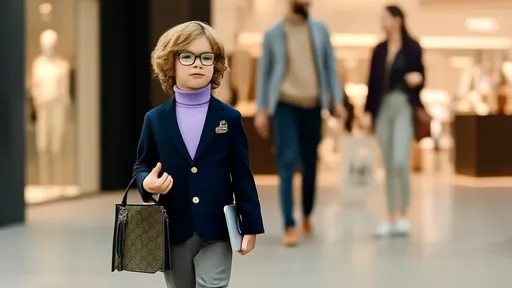
The fashion industry is witnessing a seismic shift as Generation Alpha – children born between 2010 and 2024 – emerges as unexpected power players in household purchasing decisions. These digital natives, raised with tablets in their hands and influencer culture in their bloodstream, are rewriting the rules of family consumption patterns with particular dominance in apparel choices.
The luxury fashion landscape has always been a carefully curated ecosystem where price tags serve as invisible barriers between social strata. When Coach, the American leather goods brand synonymous with affordable luxury, began slashing prices across its collections, the move sent shockwaves through the industry and triggered an unexpected wave of class anxiety among its customer base.