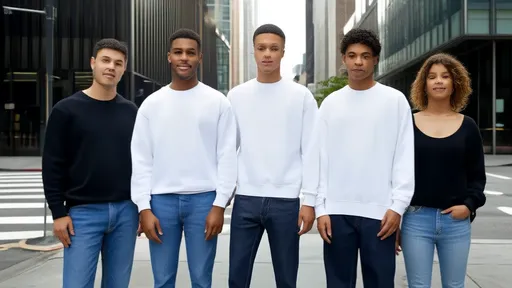
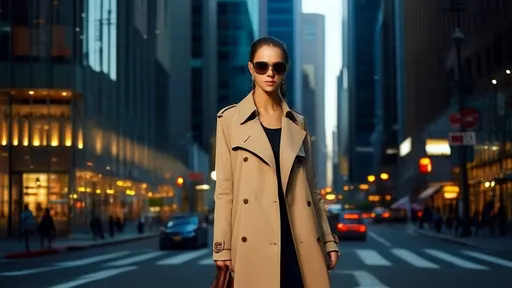
In an era dominated by polished influencer marketing and celebrity endorsements, Uniqlo's "regular people" fashion shows stand out as a deliberate departure from industry norms. The Japanese apparel giant has built a global empire by celebrating the mundane, transforming everyday wear into a cultural phenomenon. Their recent "Uniqlo U" showcase in Tokyo featured not professional models but office workers, students, and retirees - a strategic move that reveals deeper currents in contemporary retail psychology.
The term "anti-elitism" has become something of a fashion industry buzzword, but Uniqlo's approach goes beyond mere branding. Where luxury houses craft narratives of exclusivity, Uniqlo's creative director Naoki Takizawa explains their philosophy: "We design clothes for the subway, not the runway." This isn't just rhetoric; their production cycles prioritize functionality over trends, with heat-retaining fabrics and stain-resistant coatings receiving more R&D budget than seasonal silhouettes.
Market analysts note an interesting paradox. While fast fashion competitors race to replicate haute couture at breakneck speeds, Uniqlo has cultivated what retail strategists call "democratic desire." Their bestselling Ultra Light Down jackets appear deliberately generic - wearable by anyone from Tokyo bankers to Berlin art students without signaling particular subcultures or class affiliations. This calculated neutrality, according to consumer behavior researchers, actually broadens appeal across demographic segments.
The financial implications are striking. Uniqlo's parent company Fast Retailing reported a 23% profit surge last quarter, outperforming rivals who invest heavily in celebrity collaborations. Their marketing expenditure as a percentage of revenue sits nearly 40% below industry average. Instead of paying Kim Kardashian millions for a Instagram post, they crowdsource content from customers wearing their basics in unglamorous settings - commuting, grocery shopping, or doing laundry.
Cultural critics argue this represents more than clever cost-cutting. Sociology professor Dr. Evelyn Cho from Seoul National University observes: "In post-pandemic economies, we're seeing a rejection of performative consumption. Younger generations particularly resent being 'marketed to' through unrealistic beauty standards." Uniqlo's product photography deliberately includes wrinkles, loose threads, and imperfect fits - subtle cues that resonate with authenticity-hungry consumers.
The supply chain tells another part of the story. While competitors struggle with sustainability backlash, Uniqlo's "Lifewear" concept emphasizes longevity over disposability. Their repair workshops and garment recycling programs generate less headlines than flashy designer collabs but create steady brand loyalty. A recent MIT study found Uniqlo customers keep items 2.3 times longer than comparable Zara purchases, with 68% reporting they "feel guilty" throwing away Uniqlo products versus 22% for H&M.
This commercial strategy isn't without risks. Some industry insiders warn that excessive focus on utilitarianism could make the brand seem bland. "There's a fine line between accessible and anonymous," cautions former J.Crew creative director Jenna Lyons. Indeed, Uniqlo's European expansion initially faltered when minimalist aesthetics were misinterpreted as lack of personality. The company course-corrected by emphasizing fabric technology - their AIRism and Heattech lines now account for over 30% of overseas sales.
Perhaps most fascinating is Uniqlo's data approach. While competitors track celebrity fashion trends, Uniqlo's Tokyo headquarters analyzes subway foot traffic patterns, office chair wear-and-tear, and even how people fold clothes in different regions. Their infamous "one size fits most" philosophy actually stems from meticulous ergonomic studies of over 10,000 body scans across continents - a far cry from traditional sample size models.
The psychological impact of this "anti-glamour" positioning may be Uniqlo's most valuable asset. In focus groups, participants consistently describe Uniqlo shopping experiences as "pressure-free" compared to intimidating luxury boutiques or chaotic fast fashion outlets. The company has quietly pioneered what behavioral economists call "the democratization of taste" - making "normal" aspirational. As one 28-year-old Shanghai office worker remarked: "Wearing Uniqlo feels like joining a global uniform where nobody judges you."
Looking ahead, Uniqlo faces challenges in maintaining this delicate balance. The rise of TikTok fashion microtrends threatens their slow-and-steady approach, while copycat brands adopt similar "real people" marketing. Yet with plans to open 300 new stores in North America alone, their bet on anti-elitism appears far more than a passing tactic. As retail landscapes convulse with metaverse experiments and AI stylists, Uniqlo's success suggests millions still crave something refreshingly ordinary - clothes that don't try too hard to be anything but useful.
Ultimately, what appears as commercial humility reveals sophisticated market understanding. In rejecting fashion's traditional hierarchies, Uniqlo hasn't abandoned aspiration - they've redefined it. Their vision of meritocratic style, where a $20 sweater earns its place through engineering rather than logos, taps into deeper cultural shifts. As boundaries blur between workwear and leisurewear, between global and local aesthetics, Uniqlo's "ordinary excellence" philosophy may prove to be their most extraordinary innovation yet.
The fashion industry has long been at the forefront of innovation, blending creativity with technology to redefine consumer experiences. In a groundbreaking move, the concept of the metaverse has collided with physical retail in what is being hailed as the first case of digital asset materialization—specifically, through the lens of loafers. This isn’t just about virtual sneakers or pixelated handbags; it’s a full-scale integration of blockchain-based ownership and tangible craftsmanship. The "Loafverse" initiative, as it’s been dubbed, is rewriting the rules of how we perceive value, authenticity, and utility in fashion.
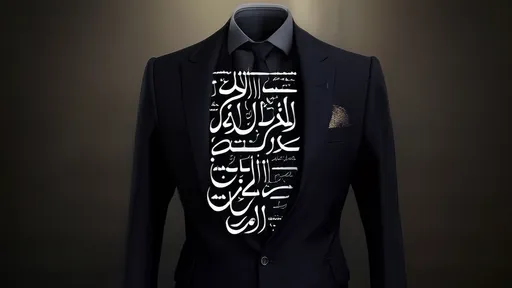
The intersection of traditional Islamic art and contemporary fashion has birthed one of the most visually striking sartorial movements in recent memory - the Persian calligraphy suit. What began as niche experimentation by avant-garde Middle Eastern designers has blossomed into a global phenomenon, with luxury houses from Milan to Dubai incorporating Arabic script deconstructions into their collections. This isn't mere cultural appropriation, but rather a profound dialogue between heritage and modernity.
In the heart of ancient Mesoamerica, the Maya civilization crafted a sophisticated calendar system that not only measured time but also encoded their cosmic worldview. Today, this intricate knowledge has found a surprising new form—wearable art. Designers and artisans are transforming the sacred symbols of the Mayan calendar into stunning pieces of jewelry and accessories, merging ancient wisdom with contemporary fashion. These creations, often referred to as "Mayan Calendar Belts," are more than just decorative items; they serve as tangible connections to a lost civilization, inviting wearers to carry a fragment of history with them.
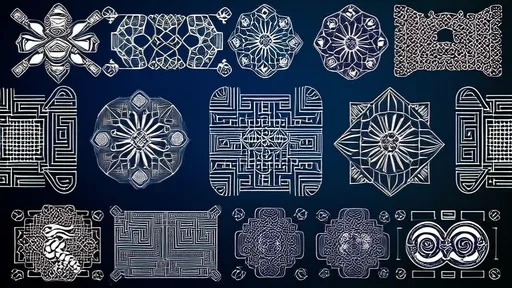
The intricate artistry of Miao silverwork, a centuries-old intangible cultural heritage of China’s Miao ethnic group, is undergoing a quiet revolution. As modern technology intersects with traditional craftsmanship, parametric design has emerged as a powerful tool to preserve, analyze, and innovate upon these delicate metalworking techniques. This fusion of ancient wisdom and computational methods is creating new possibilities for cultural preservation while respecting the essence of the craft.
The neon-lit streets of Lagos pulse with a rhythm that defies categorization – a fusion of ancient drumbeats and digital glitches that echoes through the towering megastructures of a reimagined Africa. This is the visual language of Afrofuturist cyber-tribalism, where ancestral wisdom interfaces with quantum computing, and biomechanical deities wear the masks of forgotten gods. Across the continent's creative vanguard, artists are forging a new aesthetic paradigm that dissolves the false dichotomy between tradition and innovation.
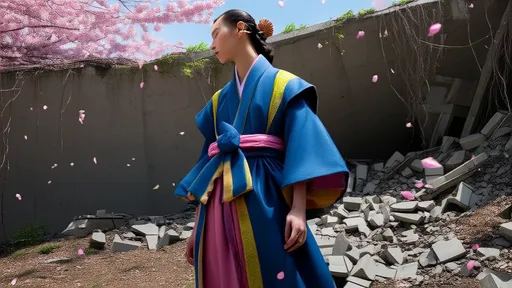
In the quiet corners of Fukushima Prefecture, where cherry blossoms still bloom with fragile resilience, a centuries-old tradition is undergoing a remarkable metamorphosis. The art of kimono-making, once threatened by the triple disaster of earthquake, tsunami, and nuclear crisis in 2011, has emerged as an unexpected symbol of cultural rebirth. Local artisans, many of whom lost everything in the catastrophe, are now collaborating with contemporary designers to transform this emblem of Japanese heritage into wearable art for the global fashion stage.
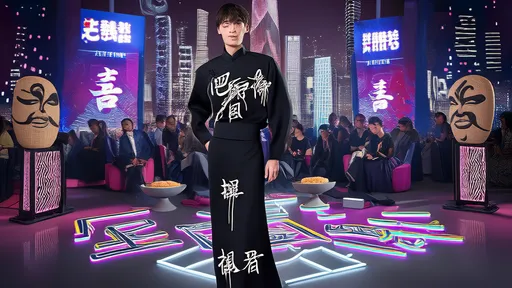
In the bustling fashion scene of China, where tradition meets modernity, the Chengdu Fashion Week has emerged as a groundbreaking platform for independent designers to showcase their creativity. This year, the event took an unexpected turn as local dialect elements became a defining feature, breaking through cultural and linguistic barriers to captivate a global audience. The fusion of Sichuan’s rich linguistic heritage with contemporary design has not only redefined regional aesthetics but also sparked conversations about identity and authenticity in fashion.
In the realm of fashion, few names evoke as much reverence and intrigue as Saint Laurent. The house’s latest offering, Desert Book, is a testament to the enduring allure of minimalism, reimagined through a lens of poetic subtlety. This collection is not merely a series of garments; it is a narrative woven from the arid landscapes of the desert, where silence speaks louder than words and simplicity becomes a form of profound expression.
In an era dominated by polished influencer marketing and celebrity endorsements, Uniqlo's "regular people" fashion shows stand out as a deliberate departure from industry norms. The Japanese apparel giant has built a global empire by celebrating the mundane, transforming everyday wear into a cultural phenomenon. Their recent "Uniqlo U" showcase in Tokyo featured not professional models but office workers, students, and retirees - a strategic move that reveals deeper currents in contemporary retail psychology.
The labyrinthine gardens of Château de la Colle Noire have long served as more than just an ornamental backdrop for Christian Dior's creative sanctuary. These meticulously curated pathways, with their towering hedges and sudden dead-ends, function as a spatial metaphor for the complex power dynamics inherent in both fashion empires and aristocratic history. Visitors who lose themselves in these verdant corridors often report experiencing a peculiar sensation - as if the very foliage whispers secrets about the unspoken hierarchies governing taste, privilege, and creative authority.
In December 2022, Balenciaga’s pre-fall 2023 collection presentation sparked a firestorm of controversy when the luxury fashion house transformed its Paris showroom into a dystopian landscape of scattered trash, crumpled paper, and debris. What was intended as a bold artistic statement on consumerism and environmental waste quickly became a lightning rod for criticism, with many accusing the brand of hypocrisy and performative activism. The spectacle, dubbed "Balenciaga’s trash mountain," blurred the lines between high fashion and social commentary, leaving audiences divided over whether it was a powerful critique or a tone-deaf stunt.
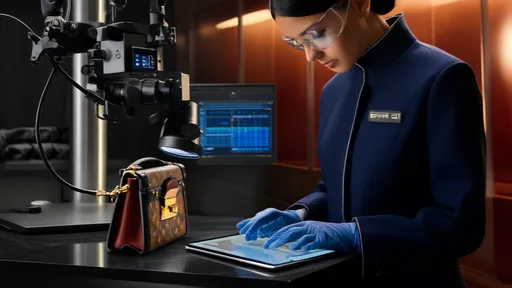
The luxury resale market has long been a battlefield where authenticity means everything. For decades, human experts with trained eyes and encyclopedic knowledge determined whether a Chanel flap bag or Rolex Daytona was genuine or counterfeit. Now, artificial intelligence is storming this exclusive domain, threatening to replace the guild of seasoned authenticators who once held unquestioned authority.
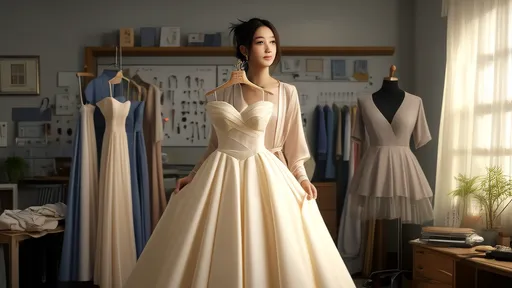
The wedding industry has long thrived on the promise of eternal love, but a new niche market is emerging from the ashes of broken vows: divorce box economics. Among the most poignant services gaining traction is wedding dress transformation—a process that allows heartbroken individuals to repurpose their once-cherished gowns into something meaningful beyond the altar. This isn’t just about recycling fabric; it’s about alchemizing grief into renewal.
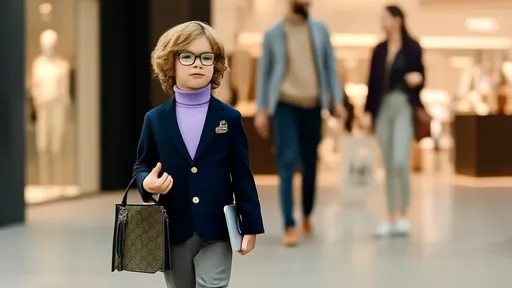
The fashion industry is witnessing a seismic shift as Generation Alpha – children born between 2010 and 2024 – emerges as unexpected power players in household purchasing decisions. These digital natives, raised with tablets in their hands and influencer culture in their bloodstream, are rewriting the rules of family consumption patterns with particular dominance in apparel choices.
The luxury fashion landscape has always been a carefully curated ecosystem where price tags serve as invisible barriers between social strata. When Coach, the American leather goods brand synonymous with affordable luxury, began slashing prices across its collections, the move sent shockwaves through the industry and triggered an unexpected wave of class anxiety among its customer base.