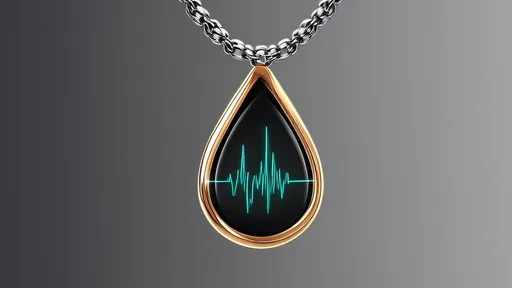
In the ever-evolving landscape of wearable technology, a fascinating convergence is taking place at the intersection of high fashion and biometric monitoring. The quest to seamlessly integrate health-tracking capabilities, particularly heart rate monitoring, into pieces of high jewelry is no longer a futuristic concept but a present-day reality. This marriage of form and function represents a significant leap from the clunky, silicone-wristband era of fitness trackers, aiming to provide data without compromising on aesthetics or luxury.
The core challenge for designers and engineers has been the obtrusive nature of traditional photoplethysmography (PPG) sensors. These sensors, which use light to detect blood volume changes in the wrist, typically require direct skin contact and are often housed in bulky, plastic modules that disrupt the flow of a beautiful bracelet or ring. The solution lies in miniaturization, material science innovation, and clever optical engineering. Advanced micro-LEDs and photodiodes, now smaller than a grain of sand, can be strategically placed within the setting of a gemstone or along the inner bezel of a ring, completely invisible to the naked eye.
Material selection plays a paramount role in this invisible integration. Traditionally, metals can interfere with optical signals. However, the use of advanced medical-grade alloys and novel composites with specific reflective properties allows light to penetrate the skin and return to the sensor with minimal loss of fidelity. Some avant-garde designs are even experimenting with certain types of treated crystals and sapphire glass, which act as both a luxurious facade and a perfectly transparent window for the underlying biometric sensors.
Beyond the hardware, the software algorithms doing the heavy lifting have undergone a revolution. Early attempts at non-contact heart rate monitoring were plagued by inaccuracies, especially with movement. Modern machine learning algorithms can now filter out an incredible amount of noise—from the natural swing of an arm to the subtle shifting of a ring on a finger. They can distinguish between the pulse of the wearer and environmental interference, delivering clinical-grade accuracy from a device that looks nothing like a medical instrument.
The power source for these exquisite pieces is another arena of innovation. The goal is to avoid daily charging, which shatters the illusion of a timeless piece of jewelry. Here, energy harvesting takes center stage. Kinetic energy harvesters, which generate power from the wearer's movement, have been refined to be incredibly efficient and minuscule. Furthermore, advanced solar cell technology allows rings and bracelets to draw energy from ambient light, often through nearly invisible micro-perforations in the metal or by using the table of a gemstone itself as a collection surface.
This technological evolution is being driven by a new demographic of consumer. The luxury market is increasingly populated by younger, tech-savvy individuals who value wellness and data but refuse to sacrifice personal style. They desire discretion and elegance; they want insights into their health and readiness without announcing it to the world with a conspicuous gadget. For them, a beautiful ring that quietly tracks heart rate variability (HRV) throughout a stressful business meeting or an elegant tennis bracelet that monitors sleep quality is the ultimate symbol of modern sophistication.
The implications extend far beyond convenience and fashion. This discreet form of monitoring enables continuous, long-term data collection in a way that obtrusive wearables cannot. This provides a richer, more holistic picture of an individual's health, capturing trends during real-life activities rather than isolated moments at a gym or doctor's office. For cardiologists and wellness professionals, this constant stream of passive data could revolutionize preventative care and early diagnosis of conditions like atrial fibrillation.
Of course, this new class of wearable does not come without its challenges and controversies. The collection of such intimate health data by luxury brands raises significant questions about data privacy and security. Who owns this biodata? How is it stored and used? Could it be monetized or, worse, compromised? Manufacturers in this space are investing heavily in end-to-end encryption and blockchain technology to assure their discerning clientele that their most personal metrics are protected with the same vigor as their financial transactions.
Looking ahead, the fusion is set to become even more profound. We are on the cusp of devices that not only monitor heart rate but also blood oxygen saturation, blood pressure, and even glucose levels, all hidden within the confines of a stunning piece of jewelry. The line between accessory and advanced health monitor will blur to the point of invisibility. The ultimate achievement, sought after by numerous design houses and tech firms, is the creation of a heirloom-quality piece that is passed down through generations, not just for its beauty, but for its role as a guardian of its wearer's wellbeing.
In conclusion, the union of high jewelry and biometric technology is a testament to human ingenuity's desire to enhance life without diminishing beauty. The successful concealment of heart rate monitoring is a technical masterpiece, involving breakthroughs in optics, material science, and artificial intelligence. It fulfills a growing desire for personalized health insight wrapped in an package of timeless elegance, proving that the future of wearable technology doesn't have to look futuristic at all. It can simply look beautiful.
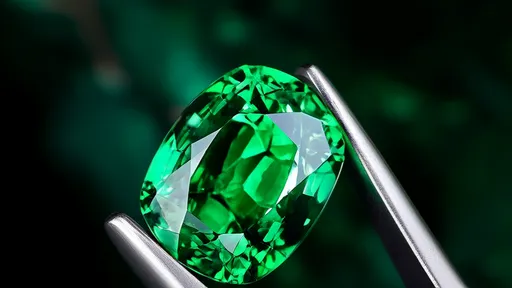
For centuries, emeralds have captivated humanity with their lush green hues, symbolizing rebirth and eternal spring. Yet behind their mesmerizing beauty lies a complex reality that every collector, jeweler, and enthusiast must confront: the widespread practice of enhancement. The treatment of emeralds with oils and resins—commonly referred to in the trade as "oiling" and "resin filling"—is not merely a technical footnote but a fundamental aspect of the gem's journey from mine to market. Understanding the nuances of these treatments is essential for appreciating both the value and the vulnerabilities of these prized gems.
In the realm of artistic reproduction, few challenges are as technically demanding and aesthetically profound as recreating Vincent van Gogh's The Starry Night within the three-dimensional confines of a crystal block. The swirling, almost turbulent brushstrokes that define the post-impressionist masterpiece present a unique frontier for laser internal engraving technology. This is not merely a question of resolution, but of capturing the very soul of the artist's hand—the pressure, the motion, the emotional intensity frozen in oil paint. The endeavor pushes the very limits of what is physically possible, probing the ultimate boundary between digital precision and analog expression.
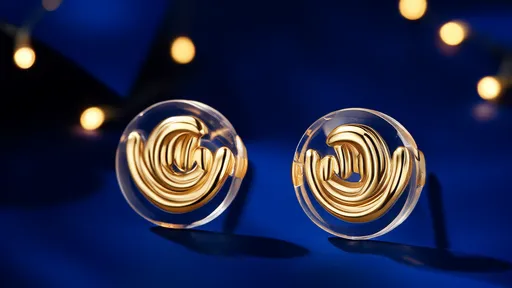
In an age where personalization is paramount, a groundbreaking fusion of science and artistry is redefining the very essence of wearable keepsakes. The concept of transforming intangible sound—the laughter of a child, a whispered "I love you," the opening chords of a wedding song—into a tangible, sculptural piece of jewelry is no longer the stuff of science fiction. This is the new frontier of bespoke luxury, where sound waves are captured, visualized, and meticulously carved into unique pieces of adornment, each one a permanent echo of a moment otherwise lost to time.
In an era where consumer preferences shift with the subtlety of a tide yet the force of a tsunami, the jewelry industry stands at a crossroads. A recent comprehensive survey of one thousand consumers has peeled back the layers of what modern buyers truly desire, revealing not just fleeting trends but a fundamental reshaping of values. This isn't merely about what is beautiful anymore; it is a story about identity, ethics, and connection.
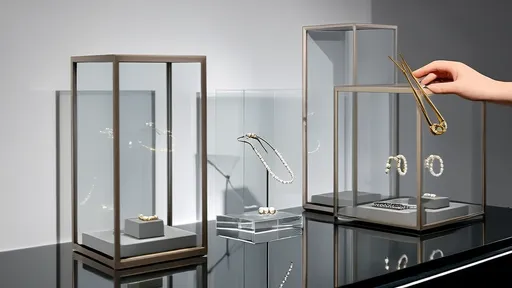
When fine jewelry transcends its traditional commercial context and enters the hallowed halls of an art museum, it undergoes a profound transformation. No longer merely an object of adornment or a symbol of wealth, it becomes a work of art, demanding a curatorial approach as nuanced and deliberate as that afforded to any painting or sculpture. The challenge for curators and exhibition designers is to create an environment that honors the intrinsic artistic value of the pieces while simultaneously acknowledging their unique materiality, history, and function. This delicate balancing act forms the core of a fascinating new frontier in museology.
In the intricate tapestry of global economics, few assets demonstrate the resilience and paradoxical behavior of gold, especially within the jewelry sector. While industries often buckle under the pressure of recessions, inflationary spikes, or geopolitical turmoil, gold not only holds its ground but frequently appreciates, creating a fascinating narrative of stability amidst chaos. This phenomenon is not merely a historical anecdote but a recurring theme that economists, investors, and industry experts scrutinize to understand the deeper currents of market psychology and fundamental value.
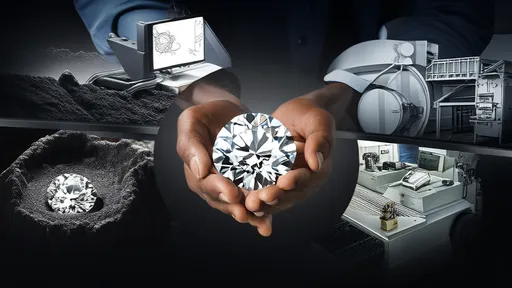
In the heart of the earth, deep within kimberlite pipes or alluvial deposits, lies the origin of one of nature’s most coveted treasures: the diamond. The journey of a single diamond from its raw, unrefined state to a sparkling gem adorning someone’s finger is a complex, global odyssey spanning continents, cultures, and countless hands. This intricate supply chain, often shrouded in mystery, reveals a narrative of geological wonder, human endeavor, economic forces, and evolving ethics.
In the hushed ateliers of Europe's oldest jewelry houses, a quiet revolution is taking place. For generations, these family-run bastions of craftsmanship have operated on a simple principle: father teaches son, secrets are kept within bloodlines, and tradition reigns supreme. But now, as fifth and sixth-generation heirs take the helm, they face a dilemma their ancestors never imagined—how to honor centuries of heritage while appealing to a generation that values TikTok trends over family trees.
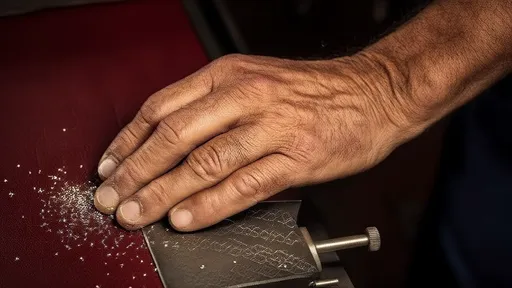
In the hushed glow of the workshop, where the air smells of metal polish and the quiet hum of a motorized tool blends with the focused breathing of its master, there exists a story written not in gemstones or precious metals, but in skin. It is a narrative etched into the very hands of the jeweler, a topography of dedication and precision that reveals itself not to the naked eye, but under the stark, revealing lens of a microscope.
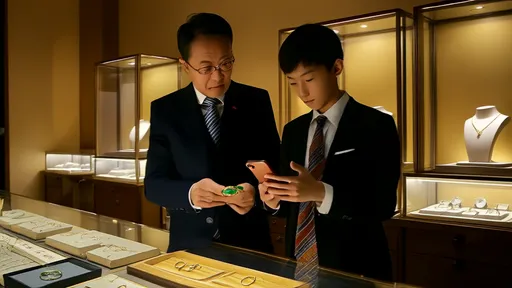
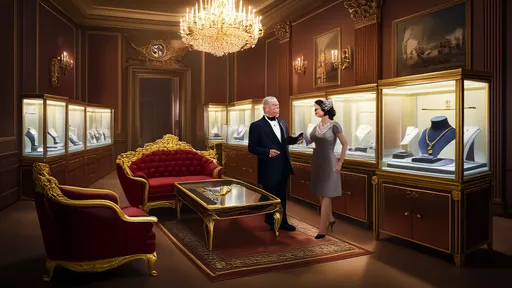
Stepping into the world's most exclusive jewelry salons is akin to entering a parallel universe—one where time slows, opulence is the baseline, and every detail is meticulously curated to cater to the most discerning of clientele. These are not mere stores; they are sanctuaries of artistry, heritage, and unparalleled personal service, designed to offer an experience as exquisite as the jewels they house.
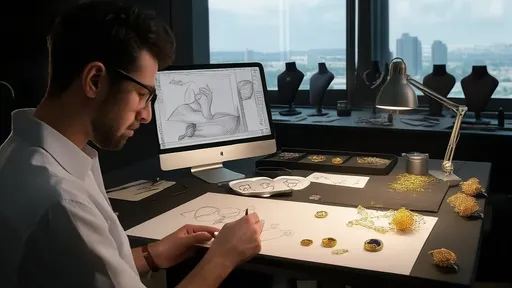
In the hushed ateliers where time seems to stand still, the journey of an extraordinary piece of high jewelry begins not with a sketch, but with a whisper of inspiration. It might be the way light fractures through a droplet of morning dew, the architectural lines of a forgotten monument, or the profound emotion of a personal story shared in confidence by a client. This initial spark, fragile and fleeting, is the sacred origin point from which all else will flow. The creative director and master designer then enter a period of deep immersion, researching, dreaming, and refining this nebulous concept into a tangible vision. It is a process of distillation, transforming the abstract into a narrative that can be told in gemstones and precious metals.
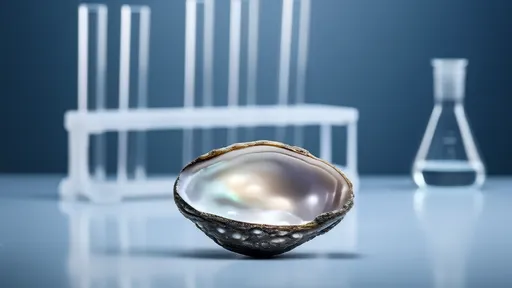
The shimmering allure of mother-of-pearl has captivated humanity for millennia, its iridescent beauty gracing everything from ancient royal adornments to modern luxury accessories. For centuries, this organic gemstone, also known as nacre, could only be harvested from the inner shells of mollusks—a process as slow as it is environmentally taxing. But a quiet revolution is unfolding in materials science laboratories, one that promises to transform pearls and mother-of-pearl from natural wonders into ethically engineered masterpieces. The future of fine jewelry is being written not in oyster beds, but in petri dishes, as scientists learn to cultivate genuine nacre in controlled environments.
In the ever-evolving landscape of wearable technology, a fascinating convergence is taking place at the intersection of high fashion and biometric monitoring. The quest to seamlessly integrate health-tracking capabilities, particularly heart rate monitoring, into pieces of high jewelry is no longer a futuristic concept but a present-day reality. This marriage of form and function represents a significant leap from the clunky, silicone-wristband era of fitness trackers, aiming to provide data without compromising on aesthetics or luxury.
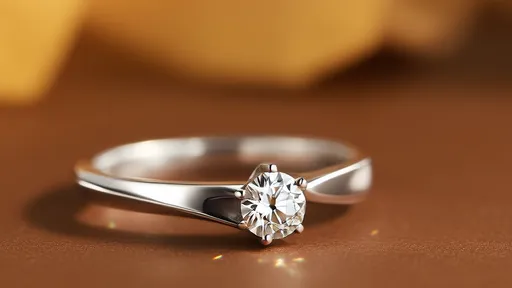
When it comes to micro-set jewelry, a common perception lingers among enthusiasts and collectors: that these exquisite pieces are too delicate for everyday wear, destined to spend their lives tucked away in velvet boxes, brought out only for special occasions. This belief has persisted for years, fueled by the intricate appearance of micro-pave settings and the tiny gemstones that define this technique. But how much of this is based on fact, and how much is simply myth? As someone who has both worn and studied fine jewelry for decades, I’ve found that the reality is far more nuanced—and reassuring—than many assume.
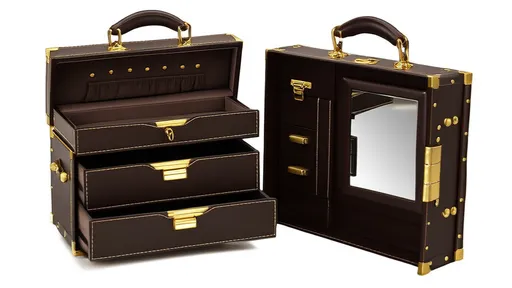
The journey of the travel jewelry box is a fascinating narrative of human ingenuity meeting evolving needs. What began as a simple protective pouch has morphed into a sophisticated piece of functional art, reflecting our changing relationship with adornment, mobility, and security. The evolution is not merely about aesthetics; it is a profound story of innovation driven by the fundamental desires to protect valuable possessions from theft, shield delicate items from damage, and finally, to organize them with intuitive elegance. This transformation mirrors the broader history of travel itself, moving from the precarious journeys of merchants on dusty trade routes to the sleek efficiency of modern globetrotting.