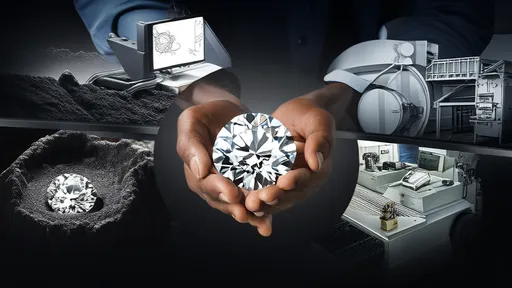
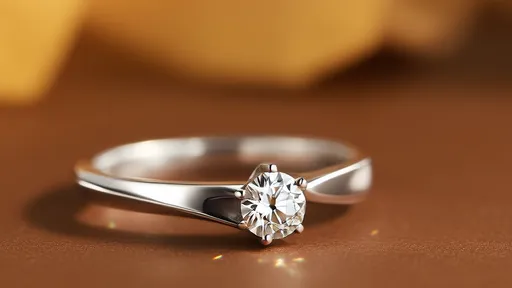
In the heart of the earth, deep within kimberlite pipes or alluvial deposits, lies the origin of one of nature’s most coveted treasures: the diamond. The journey of a single diamond from its raw, unrefined state to a sparkling gem adorning someone’s finger is a complex, global odyssey spanning continents, cultures, and countless hands. This intricate supply chain, often shrouded in mystery, reveals a narrative of geological wonder, human endeavor, economic forces, and evolving ethics.
The story begins in the mines, scattered across a select few regions of the world. Major players like Botswana, Russia, Canada, and Angola host operations that range from massive open-pit excavations to deep underground tunnels. Here, in harsh and demanding environments, heavy machinery and skilled laborers work in tandem to move immense amounts of earth. The goal is to recover the elusive ore that contains the rough diamonds. This initial stage is capital-intensive and technologically advanced, relying on geological surveys and seismic data to pinpoint likely deposits. The extracted ore is then crushed and processed through a series of cycles involving water, vibration, and even X-ray technology to separate the dense diamonds from the surrounding rock and gravel. It is a process of extreme volume, requiring tons of material to yield just a few carats of gem-quality stones.
Once recovered, the rough diamonds are aggregated and prepared for their first major transition. They are sorted, categorized, and valued based on a multitude of characteristics—size, shape, color, and clarity. This critical sorting process, often handled by specialized companies in major trading hubs like Antwerp, Mumbai, or Ramat Gan, determines the diamond’s potential destiny. Will it become a flawless investment-grade stone, a centerpiece solitaire, or an industrial-grade tool? From these hubs, parcels of rough stones are sold through a mixture of long-term contracts and sight-holdings to cutting and polishing centers. This stage of the journey is where the diamond’s path truly globalizes, as the rough material is dispatched to workshops across the world.
The art of transforming a rough diamond into a brilliant gem is a craft steeped in tradition yet enhanced by modern technology. Centers in India, which handles a significant majority of the world’s diamonds by volume, specialize in smaller stones. Thailand is renowned for its expertise with colored diamonds, while New York and Antwerp are famed for their mastery of large, high-quality stones. Here, master cutters and planners study each rough diamond for weeks, sometimes months, using 3D modeling software to map its inclusions and determine the cut that will maximize its beauty, carat weight, and value. The actual cutting and polishing is a painstaking process performed by highly skilled artisans. A single misjudgment can shatter the stone or drastically diminish its value. It is a blend of ancient artistry and precision engineering, giving the diamond its final form and unleashing its fire, scintillation, and brilliance.
Following its transformation, the polished diamond enters the realm of commerce and jewelry manufacturing. It may be sold to a wholesaler, directly to a jewelry brand, or through international exchanges. Certification from renowned gemological institutes like the GIA (Gemological Institute of America) or HRD Antwerp becomes its passport, providing an objective assessment of its quality and assuring buyers of its authenticity. Jewelry manufacturers then set the stone into designs, crafting it into a ring, necklace, or pair of earrings. This stage adds another layer of value and artistry, merging the diamond with precious metals and, often, other gems to create a finished piece of jewelry. The manufacturing hubs for this stage are also globally dispersed, with significant centers in Italy, China, the United States, and again, India.
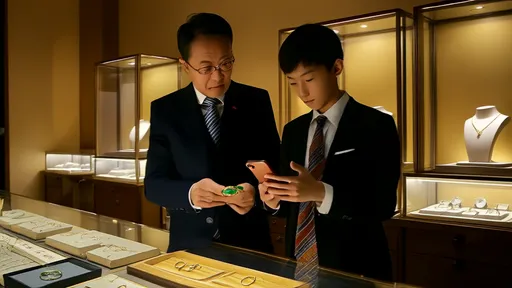
The final leg of the journey is the most visible: retail. The diamond, now set in a beautiful piece of jewelry, finds its way into branded storefronts, independent jeweler cases, and online marketplaces. Marketing campaigns built around romance, status, and milestone celebrations create the demand that pulls the diamond through the entire chain. A salesperson in a boutique in Tokyo, a mall in Dubai, or an online showroom in New York presents the piece to the end consumer. The purchase represents the culmination of the diamond’s long voyage—a symbol of love, achievement, or heritage that began billions of years ago deep within the earth.
However, this global journey is not without its shadows. For decades, the diamond supply chain has been scrutinized for its potential links to conflict financing and human rights abuses, epitomized by the term blood diamonds. In response, the industry established the Kimberley Process Certification Scheme in 2003, aimed at preventing conflict diamonds from entering the legitimate trade. While it has had some success, critics argue it is insufficient, failing to address issues like human rights violations, poverty wages, and environmental degradation still present in some mining areas. Consequently, consumer demand for transparency and ethically sourced stones has surged dramatically.
This demand is now actively reshaping the supply chain. Blockchain technology is being deployed by companies like De Beers (with its Tracr platform) to provide an immutable record of a diamond’s journey from mine to retail, offering unprecedented traceability. Furthermore, the rise of lab-grown diamonds presents a profound disruption. These stones, chemically identical to their mined counterparts but created in a matter of weeks in a controlled environment, offer a potentially more transparent and less ethically fraught alternative. They are forcing the traditional industry to further innovate and justify the provenance and story of natural diamonds.
The journey of a diamond is therefore far more than a simple physical transfer from point A to point B. It is a multifaceted narrative interwoven with geology, global economics, human skill, and a growing conscience. It connects a miner in Africa, a cutter in India, a designer in Italy, and a couple in a jewelry store halfway around the world. Each player in this vast, interconnected network adds a layer of value and meaning to the stone. As technology and ethics continue to evolve, this supply chain is transforming, striving to ensure that the symbol of beauty on one’s finger also represents a story of responsibility and integrity, from its origin deep below the earth to its place on the hand.
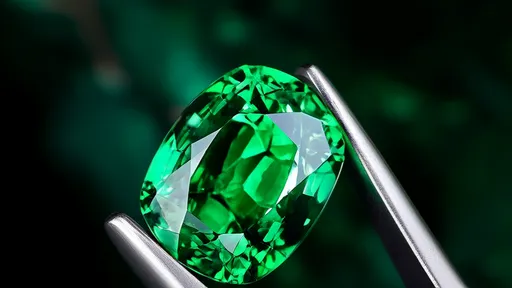
For centuries, emeralds have captivated humanity with their lush green hues, symbolizing rebirth and eternal spring. Yet behind their mesmerizing beauty lies a complex reality that every collector, jeweler, and enthusiast must confront: the widespread practice of enhancement. The treatment of emeralds with oils and resins—commonly referred to in the trade as "oiling" and "resin filling"—is not merely a technical footnote but a fundamental aspect of the gem's journey from mine to market. Understanding the nuances of these treatments is essential for appreciating both the value and the vulnerabilities of these prized gems.
In the realm of artistic reproduction, few challenges are as technically demanding and aesthetically profound as recreating Vincent van Gogh's The Starry Night within the three-dimensional confines of a crystal block. The swirling, almost turbulent brushstrokes that define the post-impressionist masterpiece present a unique frontier for laser internal engraving technology. This is not merely a question of resolution, but of capturing the very soul of the artist's hand—the pressure, the motion, the emotional intensity frozen in oil paint. The endeavor pushes the very limits of what is physically possible, probing the ultimate boundary between digital precision and analog expression.
In an age where personalization is paramount, a groundbreaking fusion of science and artistry is redefining the very essence of wearable keepsakes. The concept of transforming intangible sound—the laughter of a child, a whispered "I love you," the opening chords of a wedding song—into a tangible, sculptural piece of jewelry is no longer the stuff of science fiction. This is the new frontier of bespoke luxury, where sound waves are captured, visualized, and meticulously carved into unique pieces of adornment, each one a permanent echo of a moment otherwise lost to time.
In an era where consumer preferences shift with the subtlety of a tide yet the force of a tsunami, the jewelry industry stands at a crossroads. A recent comprehensive survey of one thousand consumers has peeled back the layers of what modern buyers truly desire, revealing not just fleeting trends but a fundamental reshaping of values. This isn't merely about what is beautiful anymore; it is a story about identity, ethics, and connection.
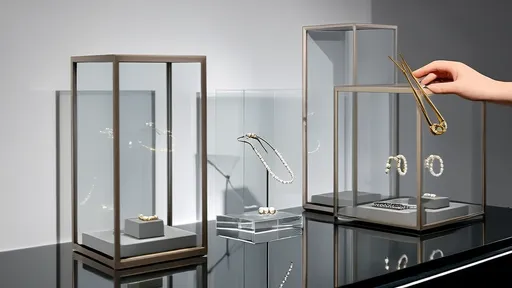
When fine jewelry transcends its traditional commercial context and enters the hallowed halls of an art museum, it undergoes a profound transformation. No longer merely an object of adornment or a symbol of wealth, it becomes a work of art, demanding a curatorial approach as nuanced and deliberate as that afforded to any painting or sculpture. The challenge for curators and exhibition designers is to create an environment that honors the intrinsic artistic value of the pieces while simultaneously acknowledging their unique materiality, history, and function. This delicate balancing act forms the core of a fascinating new frontier in museology.
In the intricate tapestry of global economics, few assets demonstrate the resilience and paradoxical behavior of gold, especially within the jewelry sector. While industries often buckle under the pressure of recessions, inflationary spikes, or geopolitical turmoil, gold not only holds its ground but frequently appreciates, creating a fascinating narrative of stability amidst chaos. This phenomenon is not merely a historical anecdote but a recurring theme that economists, investors, and industry experts scrutinize to understand the deeper currents of market psychology and fundamental value.
In the heart of the earth, deep within kimberlite pipes or alluvial deposits, lies the origin of one of nature’s most coveted treasures: the diamond. The journey of a single diamond from its raw, unrefined state to a sparkling gem adorning someone’s finger is a complex, global odyssey spanning continents, cultures, and countless hands. This intricate supply chain, often shrouded in mystery, reveals a narrative of geological wonder, human endeavor, economic forces, and evolving ethics.
In the hushed ateliers of Europe's oldest jewelry houses, a quiet revolution is taking place. For generations, these family-run bastions of craftsmanship have operated on a simple principle: father teaches son, secrets are kept within bloodlines, and tradition reigns supreme. But now, as fifth and sixth-generation heirs take the helm, they face a dilemma their ancestors never imagined—how to honor centuries of heritage while appealing to a generation that values TikTok trends over family trees.
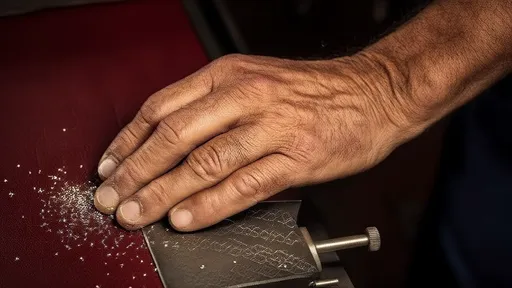
In the hushed glow of the workshop, where the air smells of metal polish and the quiet hum of a motorized tool blends with the focused breathing of its master, there exists a story written not in gemstones or precious metals, but in skin. It is a narrative etched into the very hands of the jeweler, a topography of dedication and precision that reveals itself not to the naked eye, but under the stark, revealing lens of a microscope.
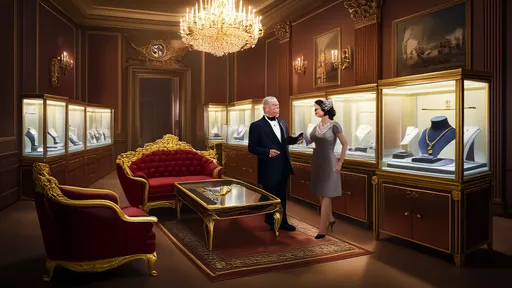
Stepping into the world's most exclusive jewelry salons is akin to entering a parallel universe—one where time slows, opulence is the baseline, and every detail is meticulously curated to cater to the most discerning of clientele. These are not mere stores; they are sanctuaries of artistry, heritage, and unparalleled personal service, designed to offer an experience as exquisite as the jewels they house.
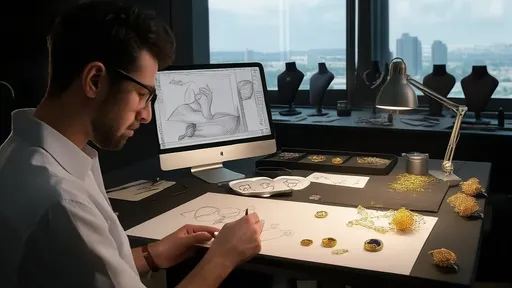
In the hushed ateliers where time seems to stand still, the journey of an extraordinary piece of high jewelry begins not with a sketch, but with a whisper of inspiration. It might be the way light fractures through a droplet of morning dew, the architectural lines of a forgotten monument, or the profound emotion of a personal story shared in confidence by a client. This initial spark, fragile and fleeting, is the sacred origin point from which all else will flow. The creative director and master designer then enter a period of deep immersion, researching, dreaming, and refining this nebulous concept into a tangible vision. It is a process of distillation, transforming the abstract into a narrative that can be told in gemstones and precious metals.
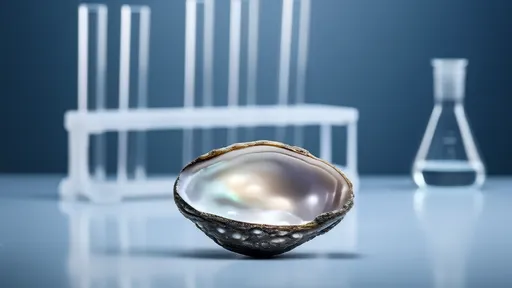
The shimmering allure of mother-of-pearl has captivated humanity for millennia, its iridescent beauty gracing everything from ancient royal adornments to modern luxury accessories. For centuries, this organic gemstone, also known as nacre, could only be harvested from the inner shells of mollusks—a process as slow as it is environmentally taxing. But a quiet revolution is unfolding in materials science laboratories, one that promises to transform pearls and mother-of-pearl from natural wonders into ethically engineered masterpieces. The future of fine jewelry is being written not in oyster beds, but in petri dishes, as scientists learn to cultivate genuine nacre in controlled environments.
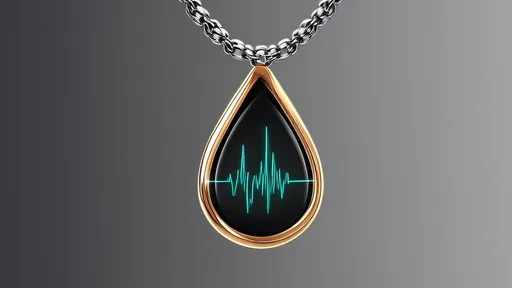
In the ever-evolving landscape of wearable technology, a fascinating convergence is taking place at the intersection of high fashion and biometric monitoring. The quest to seamlessly integrate health-tracking capabilities, particularly heart rate monitoring, into pieces of high jewelry is no longer a futuristic concept but a present-day reality. This marriage of form and function represents a significant leap from the clunky, silicone-wristband era of fitness trackers, aiming to provide data without compromising on aesthetics or luxury.
When it comes to micro-set jewelry, a common perception lingers among enthusiasts and collectors: that these exquisite pieces are too delicate for everyday wear, destined to spend their lives tucked away in velvet boxes, brought out only for special occasions. This belief has persisted for years, fueled by the intricate appearance of micro-pave settings and the tiny gemstones that define this technique. But how much of this is based on fact, and how much is simply myth? As someone who has both worn and studied fine jewelry for decades, I’ve found that the reality is far more nuanced—and reassuring—than many assume.
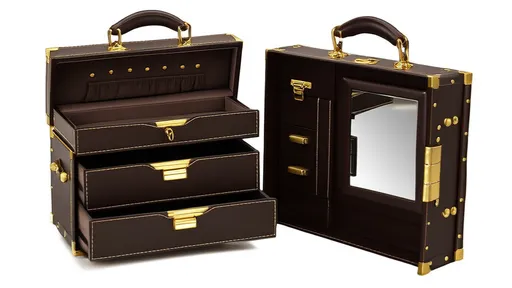
The journey of the travel jewelry box is a fascinating narrative of human ingenuity meeting evolving needs. What began as a simple protective pouch has morphed into a sophisticated piece of functional art, reflecting our changing relationship with adornment, mobility, and security. The evolution is not merely about aesthetics; it is a profound story of innovation driven by the fundamental desires to protect valuable possessions from theft, shield delicate items from damage, and finally, to organize them with intuitive elegance. This transformation mirrors the broader history of travel itself, moving from the precarious journeys of merchants on dusty trade routes to the sleek efficiency of modern globetrotting.