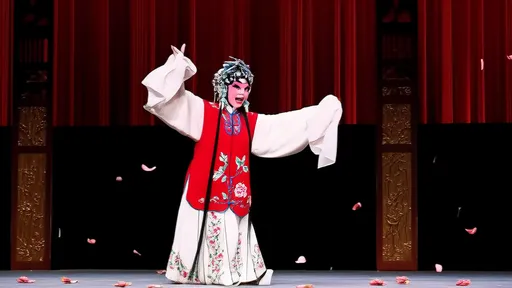
In the intricate world of Chinese opera, few elements are as visually mesmerizing and technically demanding as the art of water sleeve manipulation, known as shuixiu. This ancient performance technique, where actors wield elongated silk sleeves with breathtaking precision, represents far more than mere aesthetic embellishment. It is a profound non-verbal language, a dance of emotions conveyed through fabric and movement. Yet, to view the water sleeves in isolation would be to miss half the story. Their true power and narrative depth are unlocked only when harmoniously synchronized with another cornerstone of operatic artistry: vocal expression. The marriage of these two disciplines—the visual poetry of the sleeves and the auditory force of the voice—creates a holistic and utterly captivating theatrical experience.
The water sleeve itself is a masterpiece of costume design. Extending far beyond the hand, often by several feet, the sleeve is crafted from pristine white silk, a material chosen for its fluid weight and graceful fall. To the untrained eye, the movements may appear spontaneous, a beautiful fluttering. In reality, every flick, toss, catch, and swirl is the product of years of grueling practice. Dancers develop immense strength and control in their wrists, arms, and core to command the fabric, making it an extension of their own body. It can snap through the air with the sharpness of a whip to express anger, float down like a gentle snowfall to convey sorrow, or spiral around the performer in moments of joyous exuberance. The sleeve becomes a metaphor, visualizing the internal landscape of the character—their hidden tensions, their swirling thoughts, their overflowing passions.
Simultaneously, the vocal tradition in Chinese opera is equally codified and expressive. It is not singing in the conventional Western sense; it is a highly stylized system of vocal production where tone, pitch, and timbre are precisely calibrated to reflect specific emotions and character types. Performers train their voices to achieve a powerful, penetrating sound that can fill a theatre without amplification. There are sharp, staccato bursts for moments of alarm or command, long, mournful wavering notes for heartbreak, and bright, melodic phrases for love and contentment. The voice does not merely accompany the action; it narrates the soul's journey. It tells the audience what the character is feeling in a way that dialogue alone cannot, reaching into the emotional core of the story.
The magic truly happens when these two powerful tools are woven together in perfect unison. This synchronization is the hallmark of a master performer. Consider a scene of profound grief: a character learns of a great loss. The vocalization might begin as a low, shuddering hum, a sound of disbelief and deep pain. Correspondingly, the water sleeves would not be thrown high and dramatic, but would perhaps tremble faintly at the performer's sides, mirroring the internal shake in the voice. As the emotion swells, the voice may rise into a high, piercing cry of anguish. At that exact moment, the actor would unleash the sleeves, throwing them upward in a violent, expansive arc that seems to give physical form to the sound, releasing the character's agony into the space above them. The sound and the movement are one emotional utterance.
Conversely, in a moment of sly cunning or coquettish playfulness, the coordination is about precision and subtlety. A character might sing a quick, lilting phrase with a teasing tone. The sleeves would respond not with large throws, but with sharp, precise flicks—a quick snap toward another character or a playful swirl around their own face, highlighting the mischievous sparkle in the music. The movement punctuates the vocal line, much like a visual exclamation point. This level of coordination requires the performer to internalize the music and the emotion so completely that the division between body and voice dissolves. They are not thinking of two separate actions but expressing one unified feeling through two parallel channels.
Mastering this duality is the lifelong pursuit of every serious opera artist. Training is relentless and holistic. A student does not practice sleeves in one room and vocals in another; they are integrated from the beginning. A vocal exercise is performed while executing basic sleeve movements, forcing the body to maintain breath control and core stability even as the arms are in motion. Advanced training involves complex sequences where a single, sustained vocal note must be supported by a long, slow, controlled sweep of the sleeves, testing the performer's ability to maintain unwavering breath support and physical steadiness simultaneously. It is a immense test of endurance, concentration, and artistic sensitivity.
This synthesis is what elevates Chinese opera from a simple story to a profound and multi-sensory art form. It creates a rich tapestry where the audience is engaged on multiple levels. The ears are filled with the evocative and often haunting sounds of the voice and orchestra, while the eyes are captivated by the hypnotic dance of the white silk. When perfectly aligned, this combination bypasses intellectual understanding and speaks directly to the emotions. A viewer need not understand the dialect being sung to feel the heartbreak, the joy, or the tension because it is being communicated through two universal languages simultaneously: movement and sound. The water sleeve gives body to the voice, and the voice gives soul to the sleeve.
In today's world of rapid digital entertainment, the ancient art of integrated sleeve and vocal work stands as a testament to the power of live, human connection and artistic discipline. It is a reminder that the most powerful stories are those told not just with words, but with the entire being. The next time you witness a Chinese opera performance, watch closely. Listen to the rise and fall of the voice, and see how the sleeves dance in perfect, emotional harmony with it. You will be witnessing a conversation centuries in the making, a flawless duet between the visible and the audible, and one of the most sophisticated forms of artistic expression humanity has ever devised.
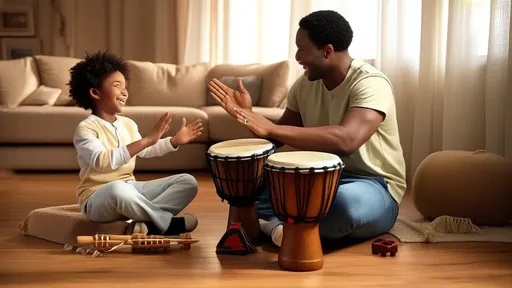
In the bustling landscape of modern parenting, where digital distractions often dominate children's attention, a refreshing trend is emerging that brings families together through rhythm and resonance. Parent-child percussion interaction games are not merely a pastime; they represent a profound shift toward tactile, collaborative play that stimulates both cognitive development and emotional bonding. These activities, which range from simple hand-clapping routines to elaborate drum circles, harness the universal language of rhythm to create shared experiences that resonate deeply within family dynamics.
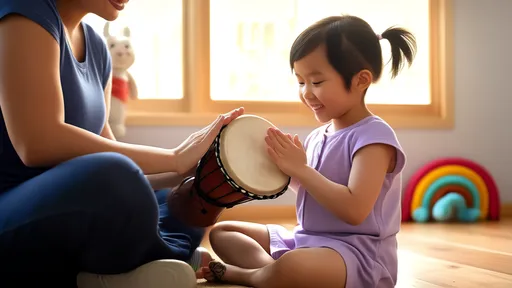
In the evolving landscape of therapeutic interventions, music communication methods for special children have emerged as a profound and transformative approach. This practice, rooted in both art and science, leverages the universal language of music to bridge gaps where traditional communication may fall short. For children with diverse needs—whether developmental, emotional, or cognitive—music offers a unique pathway to expression, connection, and growth.
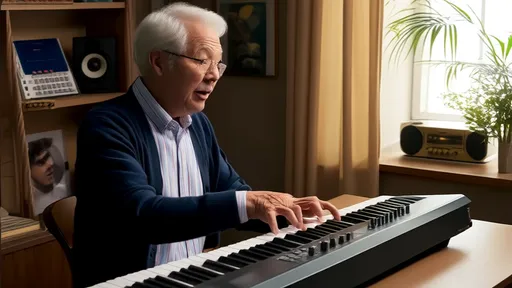
In community centers and retirement homes across the country, a quiet revolution is taking place as silver-haired learners gather around tablets and digital keyboards. The emergence of digital musical instrument education for seniors represents more than just technological adoption—it signifies a profound shift in how we perceive aging, cognitive health, and creative expression in later life.
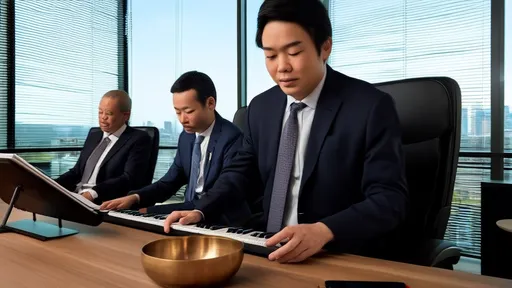
In the high-stakes world of corporate leadership, where decisions carry multimillion-dollar implications and the weight of entire organizations rests on their shoulders, executives are increasingly turning to an unexpected source of relief: music. Across boardrooms from Silicon Valley to Wall Street, a new trend is emerging as top-tier companies invest in specialized music stress reduction class for their C-suite personnel, recognizing that the well-being of their leaders directly impacts organizational performance and innovation.
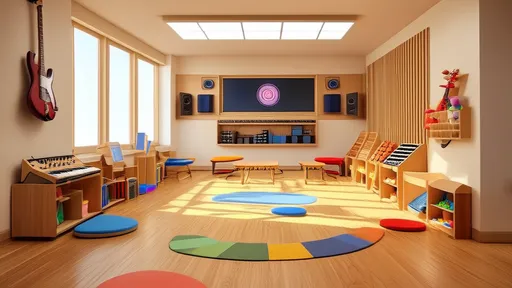
In the evolving landscape of therapeutic and educational interventions, the integration of music with sensory integration has emerged as a profoundly effective methodology. Music-based sensory integration training, often referred to as Musical Sensory Integration (MSI), represents a dynamic fusion where the structured elements of sound, rhythm, and melody are harnessed to engage and regulate the sensory systems. This approach moves beyond traditional auditory training, positioning music not as a mere backdrop but as an active, organizing force for neural processing. The core premise rests on music's innate ability to capture attention, modulate arousal levels, and provide a predictable yet flexible framework for sensory exploration and motor response.
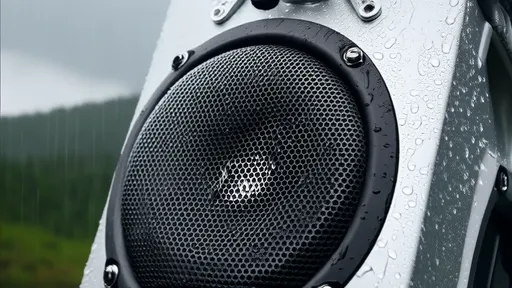
In the realm of outdoor audio systems, the challenge of protecting equipment from environmental elements remains a critical concern for engineers and event organizers alike. Water, in particular, poses a significant threat to the integrity and performance of amplification devices, speakers, and associated electronics. As such, developing robust waterproofing strategies is not merely an option but a necessity for ensuring reliability and longevity in varied climatic conditions.
In the intricate ecosystem of computer audio, the role of sound card drivers often remains underappreciated until something goes awry. These software components serve as the critical bridge between your operating system and the hardware responsible for producing and capturing sound. While most users settle for the default driver configurations provided by manufacturers, a deeper understanding of driver optimization can unlock significantly enhanced audio performance, reduced latency, and improved stability across various applications.
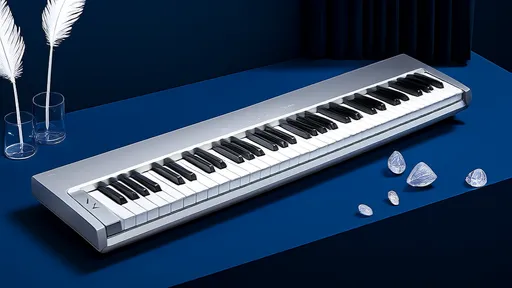
In the ever-evolving landscape of electronic keyboards, the quality and versatility of auto-accompaniment styles have become a defining feature for musicians of all levels. From hobbyists to professional performers, these built-in rhythm and harmony patterns serve as both a creative springboard and a technical benchmark. The evolution of these styles reflects not just technological advancement but also shifting musical tastes and global influences.
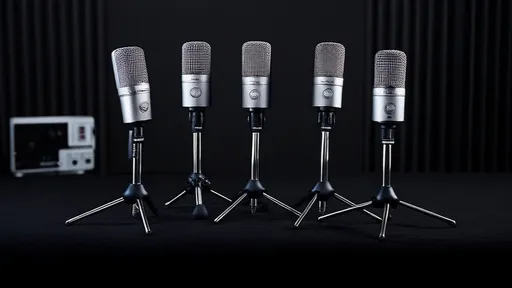
In the ever-expanding universe of content creation, the microphone stands as one of the most critical tools for anyone serious about audio quality. Whether you're a budding podcaster, a YouTuber, a streamer, or a musician recording demos, the quest for pristine sound without obliterating your budget is a common challenge. The sub-$50 and sub-$100 microphone market has exploded in recent years, offering a dizzying array of options that promise professional-grade performance. But how do they truly stack up against each other? This deep dive aims to cut through the marketing noise and provide a clear, practical evaluation of the best microphones you can get for under five hundred dollars, a price point that has become a sweet spot for high-quality, accessible audio gear.
In the rapidly evolving landscape of wireless communication, the resilience of monitoring systems against interference has emerged as a critical focal point for both developers and end-users. Recent advancements in testing methodologies have shed new light on the capabilities and limitations of modern wireless listening devices operating in increasingly congested electromagnetic environments. Field tests conducted across urban and remote settings reveal a complex interplay between signal integrity, bandwidth efficiency, and adaptive countermeasures that define the next generation of surveillance technology.
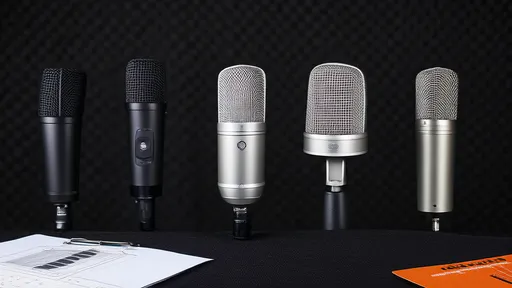
Every recording begins with a single sound, and capturing that sound accurately starts with the right microphone and, just as importantly, the right testing process. A microphone test is not merely a technical formality; it is the first and most crucial conversation between the artist and the technology. It is the moment you learn the instrument's true voice, its nuances, its strengths, and its potential pitfalls before a single note of the final performance is committed to tape. The approach to this ritual, however, is not universal. A one-size-fits-all method is a surefire path to mediocre results. The methodology must be as specialized as the microphones themselves, adapting to the distinct personalities of dynamic, condenser, and ribbon designs.
In the world of music education, few things are as enchanting yet challenging as training young voices to sing in perfect harmony. The delicate nature of children's vocal development requires innovative approaches that maintain engagement while building fundamental skills. Traditional methods of drilling scales and intervals often fall short with younger students, whose attention spans and physical capabilities differ significantly from adult learners. This has led to a fascinating evolution in pedagogical approaches, particularly through the integration of game-based learning techniques specifically designed for children's choirs.
In the intricate world of a cappella music, the art of vocal percussion stands as a testament to human creativity and the boundless potential of the human voice. Often referred to as "beatboxing" in contemporary contexts, this technique involves using one's mouth, lips, tongue, and voice to emulate drum machines, turntables, and other percussive instruments. It is the rhythmic backbone of many a cappella groups, providing the essential groove and pulse that transforms harmonious vocals into a full-bodied musical experience. The history of vocal percussion is as rich as it is diverse, with roots stretching back centuries across various cultures, yet it has found a particularly vibrant home in modern a cappella ensembles.
In the intricate world of Chinese opera, few elements are as visually mesmerizing and technically demanding as the art of water sleeve manipulation, known as shuixiu. This ancient performance technique, where actors wield elongated silk sleeves with breathtaking precision, represents far more than mere aesthetic embellishment. It is a profound non-verbal language, a dance of emotions conveyed through fabric and movement. Yet, to view the water sleeves in isolation would be to miss half the story. Their true power and narrative depth are unlocked only when harmoniously synchronized with another cornerstone of operatic artistry: vocal expression. The marriage of these two disciplines—the visual poetry of the sleeves and the auditory force of the voice—creates a holistic and utterly captivating theatrical experience.
The landscape of audio technology has been fundamentally reshaped by the emergence of magnetic bass systems, offering unparalleled depth and resonance in sound reproduction. As these systems become increasingly integrated into consumer electronics, professional audio setups, and automotive sound environments, a critical conversation has emerged—one that moves beyond pure acoustic performance to address the paramount importance of safety. The development and deployment of these powerful transducers are not merely an engineering challenge but a responsibility, necessitating a comprehensive framework to ensure they enhance our auditory experience without introducing hidden risks.